chatgpt image may 28, 2026, 12 01 29 pm

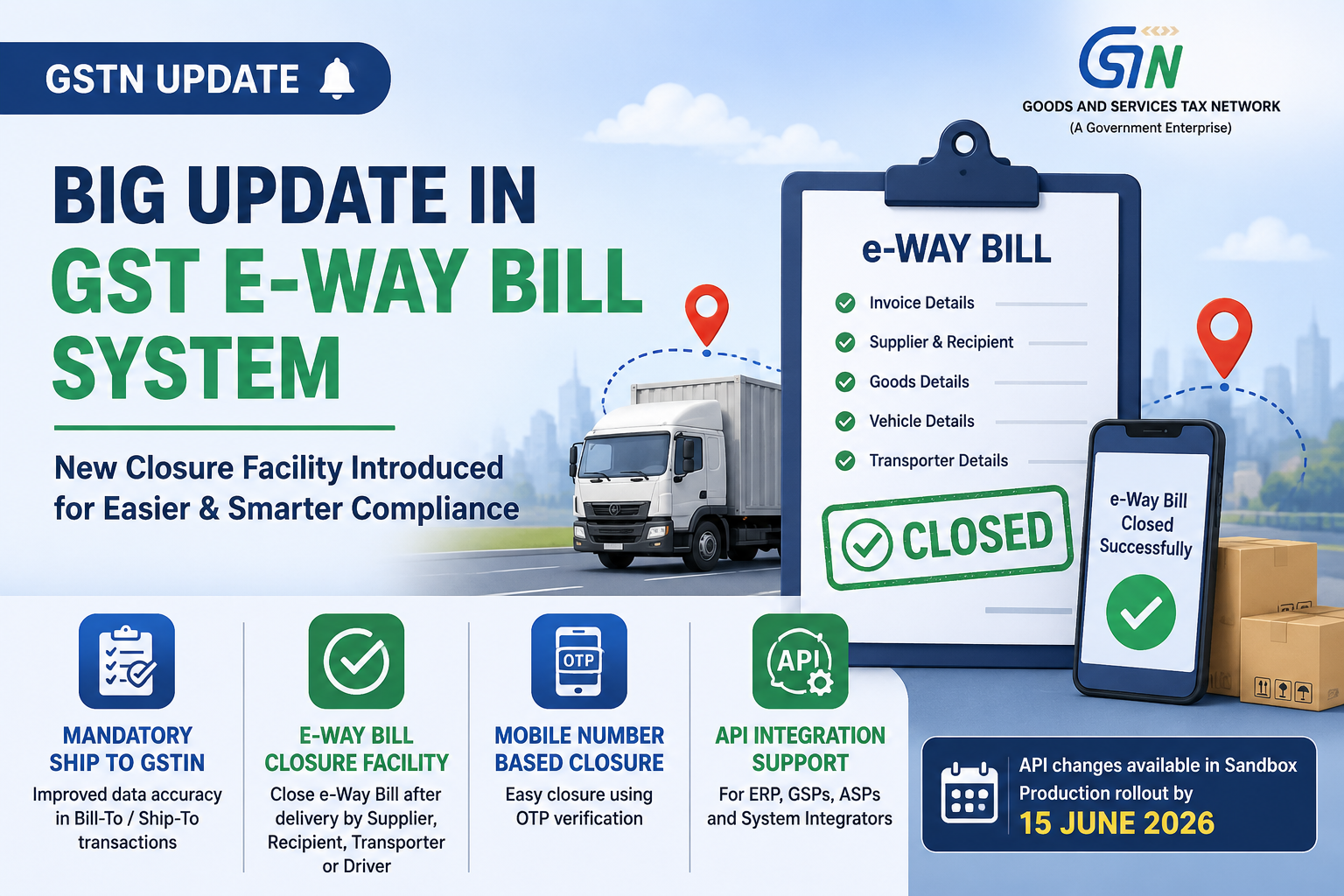
Big Update in GST e-Way Bill System – New Closure Facility Introduced

The GST Network (GSTN) has introduced important changes in the e-Way Bill (EWB) system. These changes are aimed at improving transparency, better tracking of goods movement, and reducing misuse of e-Way Bills.

The new system changes were announced through an official GSTN Advisory dated 20 May 2026.

Let us understand these updates in simple language.


What is an e-Way Bill?

An e-Way Bill is an electronic document required for movement of goods worth more than ₹50,000 under GST.

It contains details like:

  • Supplier details
  • Buyer details
  • Goods details
  • Vehicle details
  • Transport information

It helps the government track movement of goods and prevent tax evasion.


Major Changes Introduced by GSTN

The latest advisory contains two major updates:

  1. Mandatory “Ship To GSTIN” in Bill-To / Ship-To cases
  2. Introduction of e-Way Bill Closure Facility

1. “Ship To GSTIN” Now Mandatory

What is a Bill-To / Ship-To Transaction?

Sometimes, goods are billed to one party but delivered to another location.

Example:

  • ABC Ltd. in Delhi places an order.
  • Goods are directly delivered to its branch in Jaipur.

In such cases:

  • Bill To = Delhi office
  • Ship To = Jaipur branch

Now, GSTN has made it mandatory to mention the “Ship To GSTIN” while generating the e-Way Bill.


What if the Consignee is Unregistered?

If the goods are being delivered to an unregistered person, then the value “URP” must be entered in the “Ship To GSTIN” field.

“URP” means:
Unregistered Person

This change will help improve tracking and reduce incorrect reporting.


2. New e-Way Bill Closure Facility Introduced

This is the biggest update.

Earlier, users could only CANCEL an e-Way Bill.

Now, GSTN has introduced a facility to CLOSE the e-Way Bill after successful delivery of goods.

Currently, this facility is voluntary.


Why Was This Facility Introduced?

Many times:

  • Goods are delivered successfully,
  • But the e-Way Bill remains active till expiry.

This creates issues like:

  • Difficulty in tracking completed transactions
  • Misuse risk
  • Incorrect movement status
  • Compliance confusion

The new closure facility helps mark the transaction as “completed”.


Who Can Close the e-Way Bill?

The following persons can close the e-Way Bill:

  • Supplier
  • Recipient
  • Transporter
  • Driver or authorized person

This gives flexibility to businesses and logistics operators.


How Can e-Way Bill Be Closed?

The closure can be done:

1. e-Way Bill-wise

You can close one specific e-Way Bill individually.

2. Date-wise

You can close multiple e-Way Bills generated on a particular date.

This is especially useful for businesses handling bulk deliveries daily.


Mobile Number-Based Closure Facility

A very useful feature has also been introduced.

At the time of generating the e-Way Bill, users can now provide a mobile number specifically for closure purposes.

That person can later close the e-Way Bill using OTP verification.


Where Can the Mobile Number Be Updated?

The mobile number can also be updated during:

  • Vehicle update
  • Consolidated e-Way Bill operations
  • Validity extension

This provides operational flexibility.


Driver Can Also Close the e-Way Bill

This is a practical feature for transport businesses.

The driver or authorized person can:

  • Open the e-Way Bill portal
  • Enter the registered mobile number
  • Verify through OTP
  • Close the e-Way Bill

This is expected to reduce dependency on office staff.


Important Time Limit for Closure

The e-Way Bill can be closed:

  • On the same day of delivery, or
  • On the immediately next day

Businesses should ensure timely closure to maintain proper records.


API Facility Also Introduced

GSTN has also released API support for:

  • ERP systems
  • GSPs
  • ASPs
  • Large taxpayers
  • System integrators

For API-based closure, the following details are required:

  • e-Way Bill Number
  • Closure Date
  • Remarks

This will help large businesses automate the process.


Important Date for Implementation

GSTN has informed that:

  • API changes are already available in Sandbox environment
  • Production deployment is planned by 15 June 2026

Businesses using ERP or integrated software should immediately coordinate with their software vendors.


What Businesses Should Do Now

Recommended Action Steps

1. Update Internal SOPs

Businesses should update their internal logistics and GST procedures.

2. Train Staff

Accounts teams, dispatch teams, and transporters should be informed about the new closure process.

3. Update ERP Systems

ERP software should be modified to support:

  • Mandatory Ship To GSTIN
  • e-Way Bill closure
  • Mobile-based closure
  • API integration

4. Avoid Last-Minute Changes

Businesses should complete testing before the production rollout date.


Practical Benefits of This Update

The new system can provide several advantages:

Better Compliance

Completed deliveries can now be properly tracked.

Reduced Disputes

Closure confirms successful completion of transportation.

Better Audit Trail

Helps maintain proper movement records.

Operational Transparency

Transporters and businesses can monitor completed transactions more efficiently.


Important Point to Remember

Currently, the e-Way Bill Closure facility is VOLUNTARY.

It is not mandatory as of now.

However, businesses should start using it early because:

  • It may become mandatory in future,
  • Early adoption reduces compliance risk,
  • Proper closure improves documentation quality.

Final Thoughts

The GSTN’s latest update is a significant step towards smarter and more transparent logistics compliance under GST.

The introduction of the e-Way Bill Closure facility will help businesses maintain cleaner records and improve transaction traceability.

Taxpayers, transporters, ERP vendors, and logistics operators should start preparing immediately before the production rollout scheduled for 15 June 2026.

Proper implementation at an early stage will help businesses avoid future compliance issues and ensure smoother GST operations.


Source:
GSTN Advisory dated 20.05.2026 regarding Enhancements in e-Way Bill Portal.
chatgpt image mar 25, 2026, 08 40 44 pm

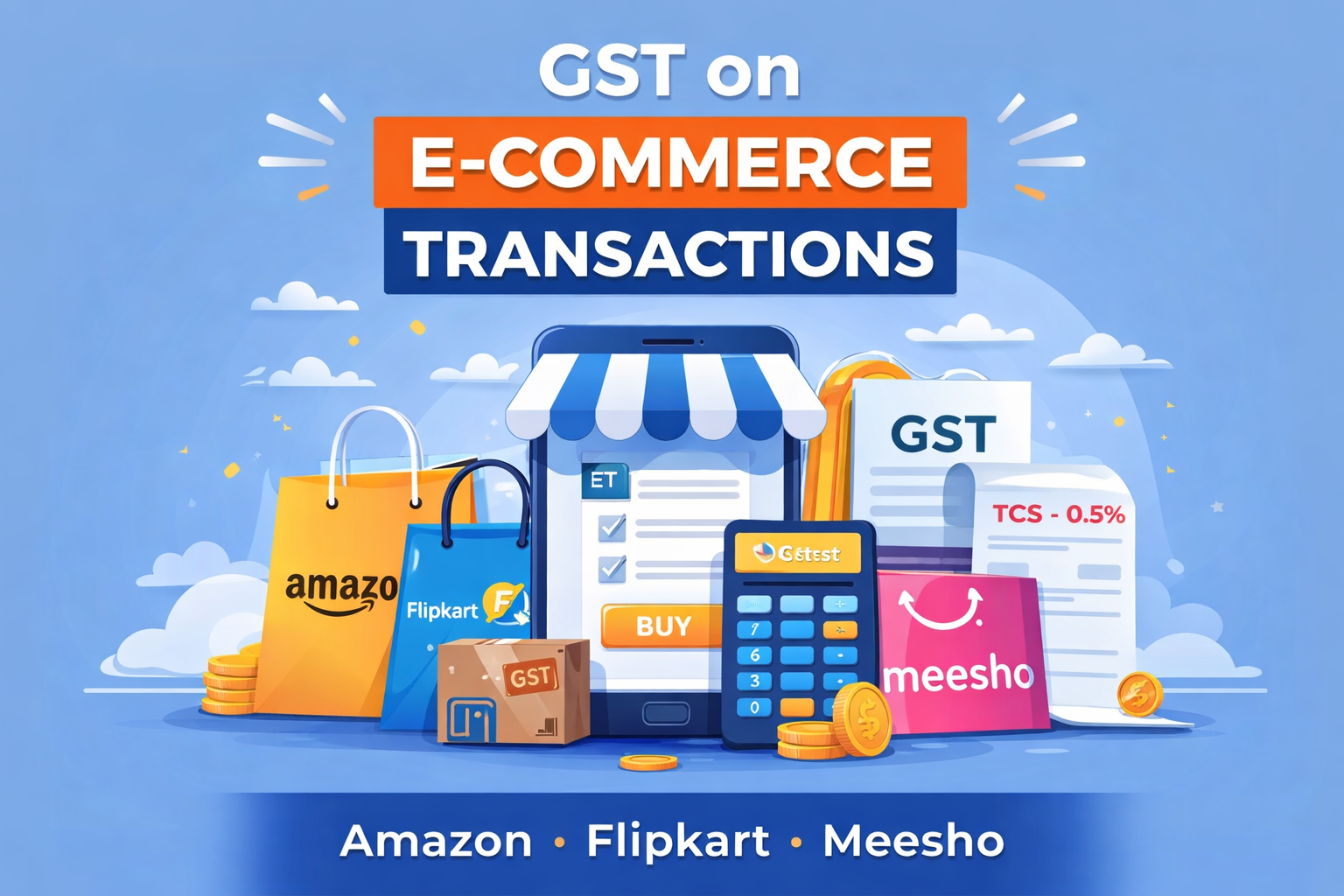
📦 GST on E-Commerce Transactions (Amazon, Flipkart, Meesho)

🟢 Introduction

Online shopping is now part of everyday life. Whether it’s clothes, gadgets, or food, we use platforms like Amazon, Flipkart, Meesho, and Zomato.

But many people are confused about:

👉 How GST works in e-commerce
👉 Who pays the tax – seller or platform

Don’t worry—this blog explains everything in simple language with real-life examples.


🔵 1. What is E-commerce?

👉 E-commerce means buying and selling goods or services through the internet.

🧾 Examples:

  • Buying a mobile from Amazon
  • Ordering food from Zomato
  • Selling products on Meesho

👉 It includes both goods and services, even digital items like courses or software.


🟣 2. What is an E-commerce Operator (ECO)?

👉 An E-commerce Operator is a platform that connects buyers and sellers.

🧾 Examples:

  • Amazon
  • Flipkart
  • Zomato
  • Uber

👉 These platforms don’t always sell products themselves—they help sellers reach customers.


🟡 3. Types of E-commerce Models

1️⃣ Marketplace Model

Platform connects buyer and seller.

👉 Example:
A seller lists products on Amazon, and Amazon charges commission.


2️⃣ Direct Sales Model

Business sells directly through its own website.

👉 Example:
Buying from a brand’s official website.


3️⃣ Inventory Model

Platform owns goods and sells directly.

👉 Example:
Flipkart selling its own stock.


🔴 4. How GST Applies?

👉 Basic rule:

✔️ GST applies just like normal sales
✔️ But e-commerce has some special rules


🟠 5. TCS (Tax Collection at Source) – Most Important Concept

👉 When you sell on platforms like Amazon or Flipkart:

✔️ Customer pays the platform
✔️ Platform pays the seller after deductions

👉 What is TCS?

👉 Platform deducts 0.5% TCS from the seller’s sales


🧾 Practical Example:

👉 Rahul sells a product for ₹1,000 on Flipkart

  • TCS @ 0.5% = ₹5
  • Flipkart deducts ₹5
  • Rahul receives ₹995

👉 This ₹5 is not a loss—it is credited to Rahul’s GST account.


🟢 6. Special Case – Platform Pays GST (Section 9(5))

👉 In some services, the platform pays GST instead of the seller.

📌 Examples:

  • Cab booking (Uber, Ola)
  • Food delivery (Zomato, Swiggy)
  • Hotel booking (in some cases)
  • Home services (plumber, electrician)

🧾 Practical Example:

👉 You book a cab for ₹500

✔️ GST is paid by the platform (Uber), not the driver


🟣 7. When Does the Seller Pay GST?

👉 In most cases:

✔️ Seller pays GST
✔️ Platform only deducts TCS


🧾 Example:

👉 A seller sells clothes worth ₹2,000 on Meesho

  • Seller pays GST
  • Meesho deducts TCS

🔵 8. GST Registration Rules

👉 Important point:

✔️ Sellers selling through e-commerce platforms usually need GST registration

✔️ Platforms (ECOs) must also register under GST


🟡 9. Returns & Compliance

👉 Platform (ECO) must:

  • File GSTR-8
  • Deposit TCS monthly

👉 Seller must:

  • File GST returns
  • Claim TCS credit

🔴 10. Common Mistakes to Avoid

❌ Not taking GST registration
❌ Ignoring TCS credit
❌ Mismatch in sales reporting
❌ Using wrong GST rate


🟢 Conclusion

👉 GST in e-commerce is easy if you remember:

✔️ Seller pays GST (mostly)
✔️ Platform collects TCS
✔️ In some services, platform pays GST

👉 Understanding these basics helps you avoid mistakes and manage your business better.


🎯 Final Tip

If you want to start selling online:

✔️ Get GST registration first
✔️ Understand pricing with GST
✔️ Keep track of TCS

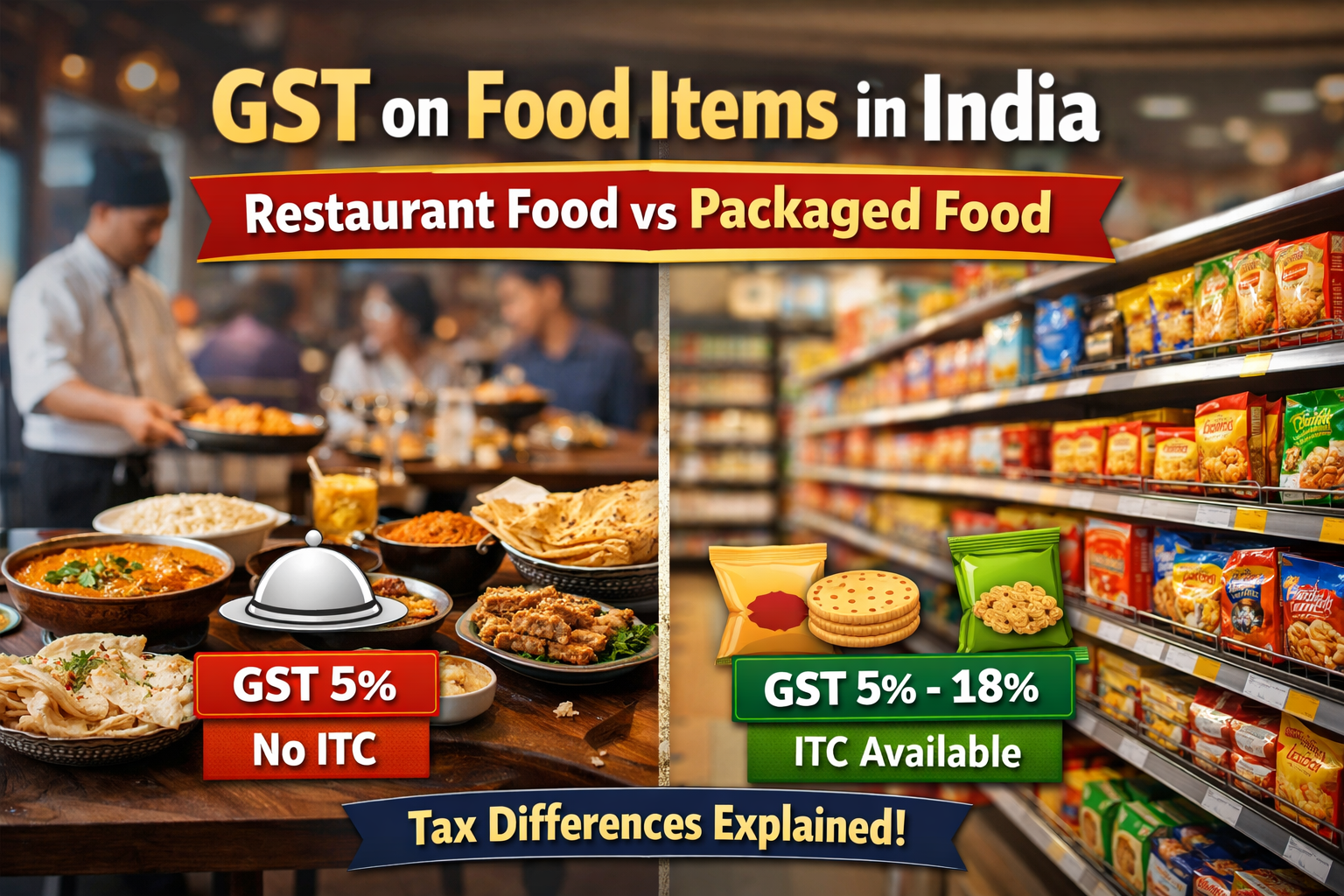
🍽️ Ever wondered why GST on restaurant food is different from packaged items?
Check out our blog on GST on Food Items – Restaurant vs Packaged Food for a clear explanation.

chatgpt image mar 16, 2026, 09 12 01 am

GST on Food Items – Restaurant vs Packaged Food

Food is one of the most common expenses for individuals and families in India. However, the GST rate on food items depends on how the food is supplied — whether it is served in a restaurant or sold as packaged food in shops or supermarkets.

Understanding this distinction is important because the GST rate, input tax credit (ITC), and compliance requirements vary significantly.

In this blog, we explain the GST treatment of restaurant food vs packaged food in India in a simple and practical manner.


1. GST on Food Served in Restaurants

Under GST, restaurants are treated as service providers because they provide not just food but also ambience, seating, service, and other facilities.

GST Rate on Restaurant Food

Type of RestaurantGST RateInput Tax Credit
Regular Restaurants5%Not Allowed
AC / Non-AC Restaurants5%Not Allowed
Restaurants in Hotels (Room tariff below ₹7,500)5%Not Allowed
Restaurants in Hotels (Room tariff above ₹7,500)18%Allowed

Key Points

• Most restaurants charge 5% GST without ITC.
• This rule was introduced to simplify taxation and reduce compliance.
• Customers normally see GST included in the restaurant bill.
• Restaurants cannot claim ITC on raw materials or services used in preparing food when taxed at 5%.

Example

If you dine at a restaurant and the bill amount is:

Food Bill = ₹1,000
GST @ 5% = ₹50

Total Payable = ₹1,050


2. GST on Packaged Food Items

Packaged food refers to pre-packed food items sold in sealed packages such as:

• Biscuits
• Namkeen
• Packaged sweets
• Chips
• Instant noodles
• Ready-to-eat food

These are treated as supply of goods, not services.

GST Rates on Common Packaged Food

Food ItemGST Rate
Packaged & labelled food grains5%
Biscuits18%
Namkeen / Bhujia12%
Chocolates18%
Ready-to-eat packaged food12% or 18%

Important Update

Since July 2022 GST changes, even pre-packaged and labelled food items such as:

  • Wheat flour
  • Rice
  • Pulses

are taxable at 5% GST, whereas earlier many of them were exempt.


3. Restaurant Food vs Packaged Food – GST Comparison

ParticularsRestaurant FoodPackaged Food
Nature of SupplyServiceGoods
GST RateMostly 5%5% – 18%
Input Tax CreditNot allowed (generally)Allowed
BillingRestaurant billProduct MRP invoice
PackagingPrepared & servedPre-packed

4. Why GST Rates Are Different

The government differentiates between these two because:

1️⃣ Restaurants provide services like seating, staff, and ambience.
2️⃣ Packaged food is a manufactured product.
3️⃣ Input tax credit availability differs to balance tax revenue.

This classification ensures that the GST system treats goods and services appropriately.


5. Practical Examples

Example 1 – Eating in a Restaurant

A family eats at a restaurant and their food bill is ₹2,000.

GST @ 5% = ₹100

Total Bill = ₹2,100


Example 2 – Buying Packaged Food

You buy packaged biscuits worth ₹100.

GST @ 18% = ₹18

Total Price = ₹118


Conclusion

The GST on food items in India depends on the nature of supply. Food served in restaurants is taxed as a service at 5% without ITC, while packaged food items are treated as goods and can attract GST ranging from 5% to 18% with input tax credit available.

For businesses, correctly classifying the supply as restaurant service or packaged goods is essential to ensure proper GST compliance and avoid disputes with tax authorities.

Also Read:

GST on Freelancers and Content Creators in India

chatgpt image mar 15, 2026, 10 31 29 am

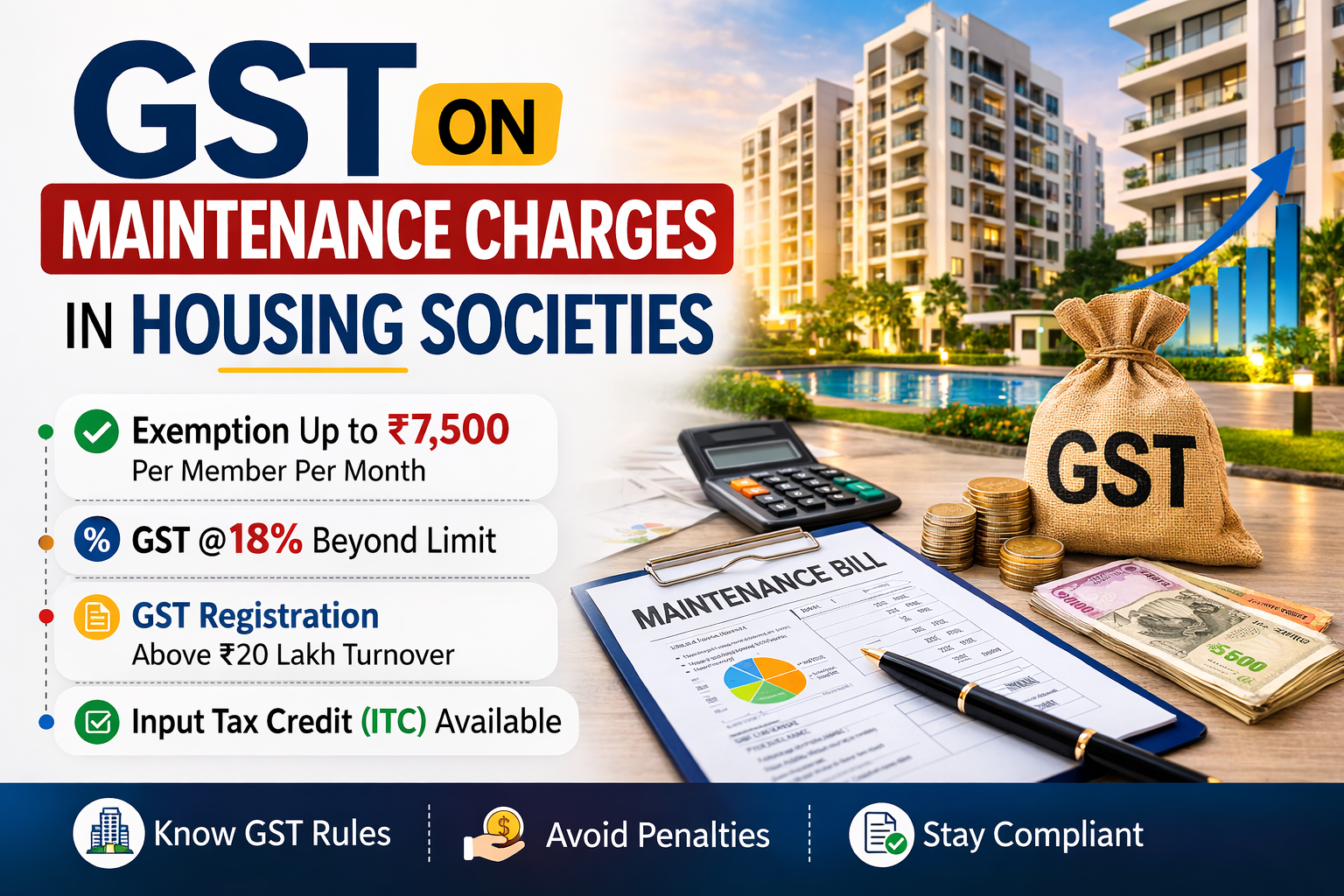
GST on Maintenance Charges in Housing Societies

Maintenance charges collected by housing societies or Resident Welfare Associations (RWAs) are very common in India. These charges are used for expenses like security, cleaning, lift maintenance, electricity for common areas, and facility management.

A common question among residents is whether GST is applicable on these maintenance charges. Let’s understand the GST provisions in detail.


1. Legal Provision under GST

Under Entry No. 77 of Notification No. 12/2017 – Central Tax (Rate), services provided by a Resident Welfare Association (RWA) to its members are exempt from GST up to a certain limit.

This exemption applies when the maintenance charges do not exceed ₹7,500 per month per member.


2. GST Applicability on Maintenance Charges

Monthly Maintenance per MemberGST Applicability
Up to ₹7,500No GST applicable (Exempt)
More than ₹7,500GST applicable on the entire amount

GST Rate: 18%

⚠️ Important point:
If the monthly maintenance exceeds ₹7,500, GST will apply on the full amount, not just the excess portion.


3. Example for Better Understanding

Example 1

Maintenance charged by society: ₹6,500 per month

Result:
No GST applicable because the amount is below ₹7,500.


Example 2

Maintenance charged: ₹8,000 per month

Result:

ParticularsAmount
Maintenance charges₹8,000
GST @18%₹1,440
Total payable₹9,440

GST is applied on ₹8,000 (full amount).


4. GST Registration Requirement for Housing Societies

Housing societies must obtain GST registration if:

1️⃣ Their aggregate turnover exceeds ₹20 lakh per year, and
2️⃣ Monthly maintenance charges per member exceed ₹7,500.

If either of these conditions is not satisfied, GST registration may not be required.


5. What is Included in Maintenance Charges?

Maintenance charges generally include:

  • Security services
  • Lift maintenance
  • Electricity for common areas
  • Cleaning and housekeeping
  • Gardening services
  • Water supply maintenance
  • Clubhouse maintenance
  • Common facility management

These services are considered supply of services by RWA to members under GST.


6. Input Tax Credit (ITC) for Housing Societies

If a housing society is registered under GST, it can claim Input Tax Credit (ITC) on expenses such as:

  • Security services
  • Housekeeping services
  • Repair and maintenance
  • Generator maintenance
  • Lift servicing

However, ITC may be restricted in some cases depending on the nature of expense.


7. Important Clarification by Government

The government clarified that:

  • GST exemption applies per member per month.
  • If the charge exceeds ₹7,500, GST applies on the entire amount.

This clarification was issued through GST Council decisions and CBIC circulars.


8. Quick Summary

ParticularDetails
Exemption Limit₹7,500 per member per month
GST Rate18%
ApplicabilityWhen maintenance exceeds ₹7,500
Registration Threshold₹20 lakh annual turnover

Conclusion

Maintenance charges collected by housing societies are generally exempt from GST up to ₹7,500 per month per member. If the charges exceed this limit and the society’s turnover crosses ₹20 lakh annually, GST at 18% becomes applicable on the entire amount of maintenance charges.

Residents and housing societies should understand these rules to ensure proper GST compliance and avoid disputes.

Related GST Guides

chatgpt image mar 14, 2026, 12 57 15 pm

GST on Gold and Jewellery in India

Gold is one of the most trusted assets in India. People buy gold not only for weddings and festivals, but also as an investment and savings option. When purchasing gold or jewellery, Goods and Services Tax (GST) applies to the transaction.

Understanding how GST works on gold helps buyers avoid confusion about pricing and bills and helps jewellers follow the correct tax rules.

This guide explains GST rates on gold, jewellery, making charges, gold coins, exchange of old gold, and GST rules for jewellers in simple language.


1️⃣ GST Rate on Gold in India

Under GST, the tax rate on gold in its basic form is 3%.

This applies to:

  • Gold bars
  • Gold biscuits
  • Raw gold
  • Gold coins

Whenever a person buys gold from a jeweller or authorized dealer, 3% GST is added to the value of gold.

Example

Suppose you purchase gold worth ₹1,00,000

ParticularAmount
Value of Gold₹1,00,000
GST @3%₹3,000
Total Price₹1,03,000

So the buyer pays 3% GST on the gold value.


2️⃣ GST on Gold Jewellery

Gold jewellery includes items such as:

  • Necklaces
  • Rings
  • Bangles
  • Earrings
  • Chains
  • Bridal jewellery sets

The gold portion of jewellery is taxed at 3% GST.

However, jewellery pricing generally consists of two components:

  1. Value of gold used in the jewellery
  2. Making charges or labour charges

Both components are taxed separately under GST.


3️⃣ GST on Making Charges

Making charges are the cost charged by the jeweller for designing and manufacturing jewellery.

This includes:

  • Craftsmanship
  • Design work
  • Labour charges
  • Jewellery finishing

The GST rate on making charges is 5%.

Example of GST Calculation

Suppose you buy a gold necklace.

ParticularAmount
Gold value₹80,000
Making charges₹8,000
GST on Gold @3%₹2,400
GST on Making Charges @5%₹400
Total Payable₹90,800

So the bill will include 3% GST on gold and 5% GST on making charges.


4️⃣ GST on Gold Coins

Gold coins are commonly purchased for investment or gifting during festivals such as Diwali and Akshaya Tritiya.

GST on gold coins is 3%.

Gold coins can be purchased from:

  • Jewellery stores
  • Authorized dealers
  • Banks

Most banks sell 24-carat gold coins with purity certification.


5️⃣ GST on Exchange of Old Gold Jewellery

Many people exchange their old jewellery for new jewellery at a jeweller’s shop.

In such cases, the jeweller usually:

  1. Calculates the value of old gold
  2. Deducts that amount from the price of new jewellery

GST is applied on the full value of the new jewellery purchased.

Example

ParticularAmount
Price of New Jewellery₹90,000
Old Gold Value₹30,000
Amount Payable₹60,000

GST will be calculated on ₹90,000, not on ₹60,000.

This is because the exchange is treated as a supply of new jewellery.


6️⃣ GST on Gold Purchased for Investment

Many people buy gold as an investment in the form of bars or coins.

In such cases:

  • GST rate remains 3%
  • GST becomes part of the purchase cost
  • Individuals cannot claim any GST credit

GST credit is available only to registered businesses dealing in gold.


7️⃣ GST Rules for Jewellers

Jewellers who sell gold jewellery must comply with GST regulations.

GST Registration

Jewellers must obtain GST registration if their annual turnover exceeds the prescribed threshold limit.

Charging GST

A registered jeweller must:

  • Charge 3% GST on gold jewellery
  • Charge 5% GST on making charges
  • Issue a proper GST invoice

Filing Returns

Registered jewellers must regularly file GST returns such as:

  • GSTR-1 (details of outward supplies)
  • GSTR-3B (summary return)

8️⃣ Input Tax Credit (ITC) for Jewellers

Jewellers can claim Input Tax Credit (ITC) on GST paid on certain purchases related to their business.

Examples include:

  • Raw gold purchased from registered suppliers
  • Packaging materials
  • Business equipment and machinery

However, ITC must follow the rules and documentation requirements under GST law.


9️⃣ Important Points Buyers Should Know

Before purchasing gold jewellery, customers should keep the following points in mind:

✔ Always ask for a GST invoice
✔ Verify gold purity and hallmark certification
✔ Understand that GST applies to both gold value and making charges
✔ Check the breakup of gold price, making charges, and GST in the bill
✔ Compare making charges across different jewellers


🔟 Why Understanding GST on Gold Matters

Gold purchases often involve large amounts of money, especially during weddings and festivals. Understanding GST helps buyers:

  • Avoid overcharging by jewellers
  • Verify the correct tax rate
  • Make informed purchasing decisions

Transparency in billing also ensures that customers know exactly what they are paying for.


Conclusion

Under GST, gold and gold jewellery attract a 3% tax, while making charges are taxed at 5%. When purchasing jewellery, buyers should carefully check the invoice breakup of gold value, making charges, and GST.

Understanding these GST rules helps consumers ensure fair pricing and proper billing when buying gold.

Businesses must also understand GST on rent for commercial properties.

Link to:
GST on Rent in India

chatgpt image mar 13, 2026, 10 29 32 am

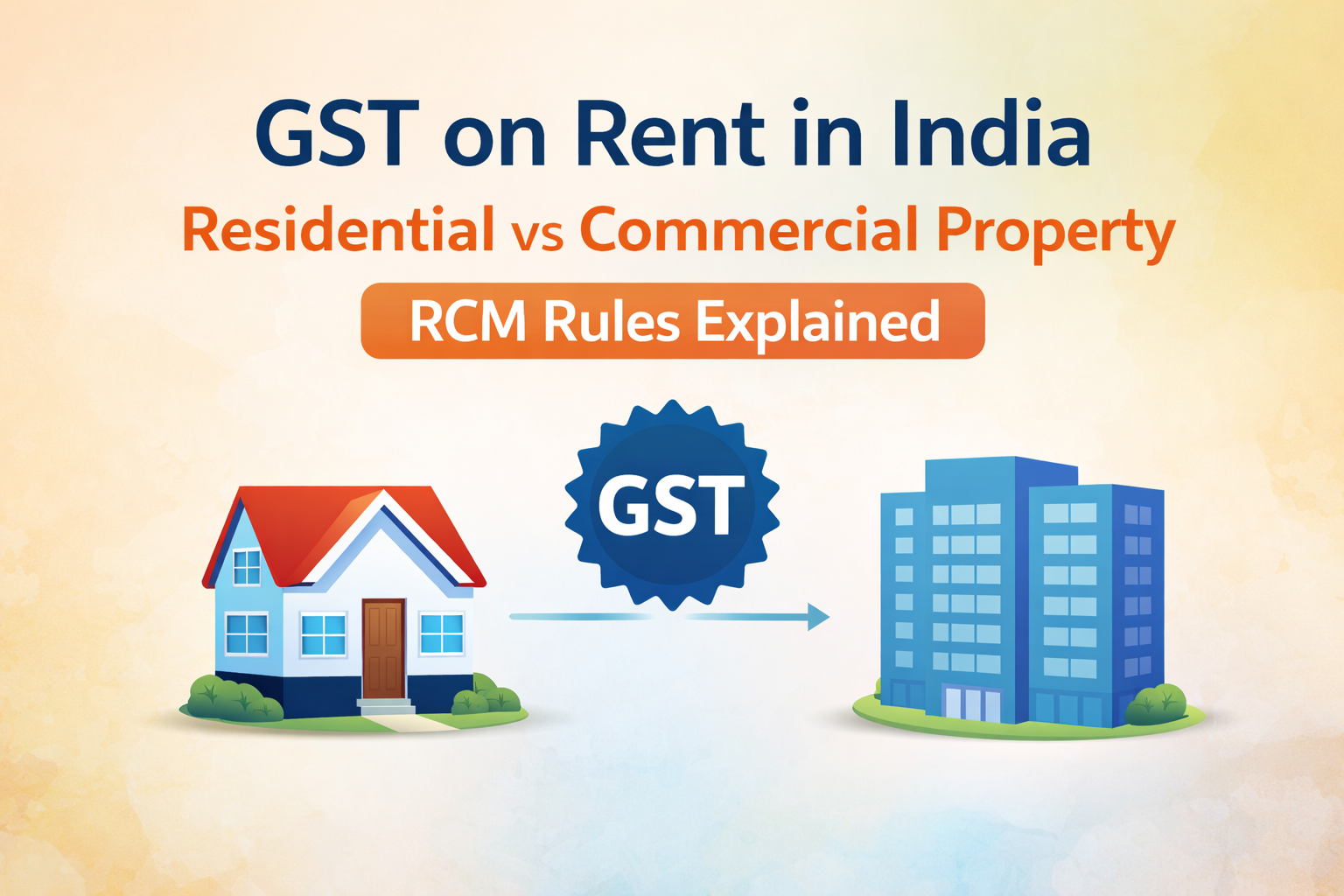
GST on Rent in India

Renting property is very common in India—people rent houses, shops, offices, warehouses, and more. Under the GST law, renting of immovable property is treated as a supply of service. However, GST treatment depends on three main factors:

  • Type of property (Residential or Commercial)
  • GST status of the tenant (Registered or Unregistered)
  • Purpose of use (Personal or Business)

This blog explains GST on residential rent, commercial rent, exemptions, and reverse charge mechanism (RCM) in simple language.


1. GST on Renting of Residential Dwelling

Under Entry 12 of Notification No. 12/2017 – Central Tax (Rate), renting of a residential dwelling is generally exempt from GST when it is used as a residence.

Example

  • A person rents a flat for living purposes.
  • Tenant is not registered under GST.

👉 Result: No GST is applicable.

This exemption applies whether the landlord is registered or unregistered.


2. Exception: Renting to a Registered Person

The exemption does not apply when a residential dwelling is rented to a registered person.

However, there is an important clarification.

If the registered person is a proprietor and:

  1. The house is rented in his personal capacity, and
  2. The rent is paid from his own account (not from business)

👉 Then the rent remains exempt from GST.

Example

Mr. A runs a proprietorship business and has GST registration.
He rents a house for living with his family, paying rent from his personal bank account.

👉 Result: GST exemption continues.


3. When GST Applies on Residential Rent

GST will apply in the following cases:

Case 1: Residential property rented for business use

Example:

  • A company rents a flat for guest house or office use.

👉 GST applies.


Case 2: Residential property rented to a registered person

If the tenant is GST registered, GST becomes applicable even if used as residence (except the proprietor exception explained earlier).

But the tax is paid under Reverse Charge Mechanism (RCM).


4. Reverse Charge on Residential Rent (Entry 5AA)

Under GST rules:

Service: Renting of residential dwelling
Supplier: Any person
Recipient: Registered person

👉 GST must be paid by the tenant under RCM.

Example

A freelancer registered under GST rents a house.

  • Landlord: Individual not registered under GST
  • Tenant: GST registered

👉 The tenant must pay GST under reverse charge.

GST Rate: 18%


5. GST on Commercial Property Rent

Commercial properties include:

  • Shops
  • Offices
  • Warehouses
  • Showrooms
  • Commercial buildings

Renting of commercial property is always taxable under GST.

GST Rate: 18%


6. Reverse Charge on Commercial Rent (Entry 5AB)

RCM also applies in some commercial rent cases.

Service: Renting of immovable property other than residential dwelling
Supplier: Unregistered person
Recipient: Registered person (not under composition scheme)

👉 GST must be paid by the tenant under RCM.

Example

A business rents a shop from an individual landlord who is not registered under GST.

👉 The tenant pays GST under reverse charge.


7. Cases Where GST Does Not Apply

GST exemption continues in these situations:

1. Residential house rented to an unregistered person

Example: A family renting a house for living.

2. Proprietor renting house for personal residence

Example: GST registered trader renting house for personal use.


8. Accommodation Services Are Not Covered in Exemption

The residential exemption does not apply to:

  • Hotels
  • Hostels
  • Paying Guest (PG) accommodation
  • Camps
  • Student residences

These are treated as accommodation services and GST applies.


9. Quick Summary Table

SituationGST Applicability
Residential house rented for living to unregistered personNo GST
Residential house rented to registered personGST under RCM
Proprietor renting house for personal residenceExempt
Residential property used for businessGST applicable
Commercial property rentGST applicable
Commercial property rented by unregistered landlord to registered businessGST under RCM

10. Final Conclusion

The GST treatment of rent mainly depends on who is the tenant and how the property is used.

Simple rule to remember:

  • Residential rent for personal use → No GST
  • Residential rent to GST registered person → RCM
  • Commercial rent → GST applicable
  • Commercial rent from unregistered landlord → RCM

Understanding these rules is important for business owners, freelancers, landlords, and GST registered persons to avoid compliance issues.


Tip: If you are a GST registered person paying rent for a house or office, always check whether RCM liability applies, as failure to pay can lead to interest and penalties.

If you want to understand when GST registration becomes mandatory, read our detailed guide on Section 24 of CGST Act.

chatgpt image mar 12, 2026, 10 19 58 pm

GST for Freelancers and Content Creators in India

The rise of freelancing, YouTube, Instagram influencing, and online services has created many new income opportunities in India. However, many freelancers and content creators are confused about whether they need GST registration and how GST applies to their income.

In this guide, we will explain GST rules for freelancers and content creators in simple language with examples.


Who is a Freelancer or Content Creator?

A freelancer is a person who provides services independently instead of working as a full-time employee.

Examples include:

  • Graphic designers
  • Website developers
  • Digital marketers
  • Video editors
  • Content writers

A content creator earns money through online platforms such as:

  • YouTube monetization
  • Instagram brand collaborations
  • Affiliate marketing
  • Sponsorships and brand promotions

Under GST law, these activities are considered “supply of services.”


Do Freelancers Need GST Registration?

Freelancers must register for GST if their annual turnover exceeds the prescribed limit.

GST Registration Threshold

Type of StateGST Registration Limit
Normal States₹20 lakh
Special Category States₹10 lakh

If your total income from freelancing exceeds ₹20 lakh in a financial year, GST registration becomes mandatory.


Special Rule for Freelancers Working With Foreign Clients

Many freelancers provide services to clients outside India through platforms like Upwork or direct contracts.

Such services are treated as Export of Services under GST.

Conditions for Export of Services

To qualify as export of services:

  1. Supplier must be located in India
  2. Client must be located outside India
  3. Payment must be received in foreign currency
  4. Place of supply must be outside India

If these conditions are met, the service becomes Zero Rated Supply.

This means:

  • GST rate = 0%
  • You can export services without paying GST by filing LUT (Letter of Undertaking).

GST on Income from YouTube and Social Media

Content creators can earn from several sources:

1️⃣ YouTube Monetization

Income from ads shown on YouTube videos is considered export of services because the payment usually comes from foreign entities.

GST implication:

  • Zero-rated supply
  • LUT can be used
  • No GST payable

2️⃣ Brand Collaborations

If Indian brands pay you to promote their products:

  • GST will apply if turnover exceeds ₹20 lakh
  • Service falls under Advertising / Promotion Services

GST rate generally: 18%

3️⃣ Affiliate Marketing

Affiliate commissions from platforms like Amazon are treated as service income and may attract GST if the threshold is crossed.


Example for Better Understanding

Suppose Rahul is a freelance graphic designer in Delhi.

His annual income is:

SourceIncome
Foreign clients₹12 lakh
Indian clients₹10 lakh
Total₹22 lakh

Since his turnover exceeds ₹20 lakh, he must:

  • Take GST registration
  • Charge GST on Indian clients
  • Export services to foreign clients without GST using LUT

Can Freelancers Opt for Composition Scheme?

No. Freelancers and service providers generally cannot opt for the composition scheme (except certain small service providers under special conditions).

Most freelancers fall under normal GST scheme.


GST Returns for Freelancers

After GST registration, freelancers must file returns regularly.

Common returns include:

  • GSTR-1 – Details of sales/services
  • GSTR-3B – Summary return and tax payment

Small taxpayers may also opt for Quarterly Return Monthly Payment (QRMP) scheme.


Benefits of GST Registration for Freelancers

GST registration can also provide some advantages:

✔ Professional credibility with clients
✔ Ability to work with large companies
✔ Claim input tax credit on business expenses
✔ Compliance with Indian tax laws


Conclusion

Freelancing and content creation are rapidly growing career options in India. While GST rules may seem complex, the basic principle is simple:

  • GST registration is required if turnover exceeds ₹20 lakh.
  • Services provided to foreign clients are treated as exports and usually taxed at 0%.
  • Income from Indian clients or brand collaborations may attract GST.

Understanding these rules helps freelancers stay compliant and avoid penalties.

When GST Registration Becomes Mandatory for Freelancers

Normally, freelancers must register for GST only if their annual turnover exceeds ₹20 lakh.

However, in certain cases, GST registration becomes mandatory regardless of turnover under Section 24 of the CGST Act.

Situations Where Freelancers Must Register for GST

Freelancers must take GST registration even below ₹20 lakh if they:

  • Provide inter-state services
  • Sell services through e-commerce platforms
  • Are required to pay tax under reverse charge
  • Act as an input service distributor

For example:

If a Delhi-based freelance digital marketer provides services to a client in Mumbai, it may be considered an inter-state supply, which can trigger mandatory registration under Section 24 of the CGST Act.

You can read our detailed guide on Section 24 of CGST Act (Compulsory GST Registration) to understand when GST registration becomes mandatory even without crossing the ₹20 lakh threshold.

chatgpt image mar 11, 2026, 03 22 42 pm

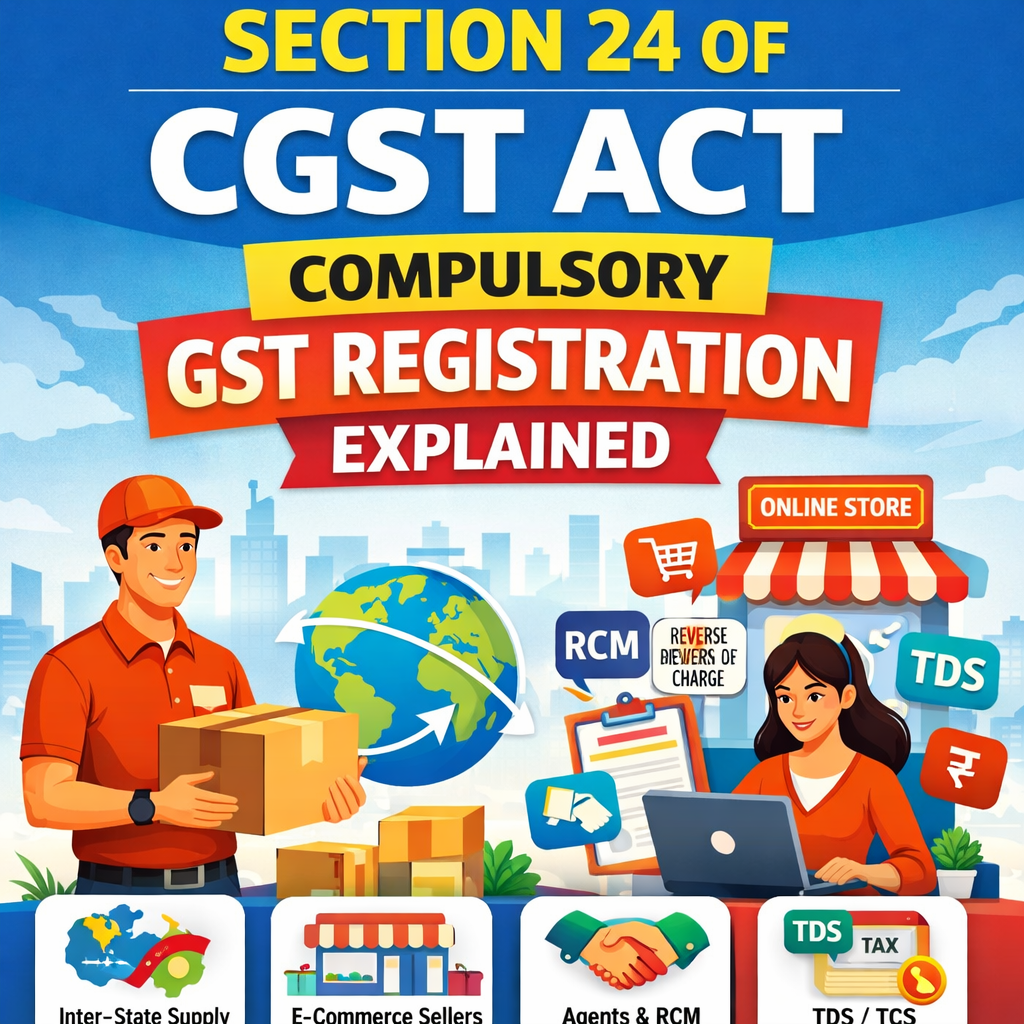
Section 24 of CGST Act: Compulsory GST Registration

Below are the main categories where GST registration becomes mandatory.


1. Persons Making Inter-State Taxable Supply

If a person supplies goods or services from one state to another state, GST registration becomes compulsory.

Example

Rahul lives in Delhi and sells graphic design services to a company in Mumbai.

Even if Rahul earns only ₹3 lakh per year, he is making an inter-state supply, therefore:

➡ Rahul must obtain GST registration.


2. Casual Taxable Persons

A casual taxable person is someone who occasionally supplies goods or services in a state where they do not have a fixed place of business.

Example

A clothing seller from Jaipur sets up a stall in a Delhi exhibition for 5 days.

Even if he sells products worth ₹50,000, he must obtain temporary GST registration as a casual taxable person.


3. Persons Required to Pay Tax under Reverse Charge (RCM)

In some transactions, the buyer (recipient) is required to pay GST instead of the seller.

This is called Reverse Charge Mechanism (RCM).

If a person is liable to pay tax under RCM, GST registration becomes compulsory.

Example

A company hires services from an unregistered transporter.

The company may have to pay GST under RCM, therefore GST registration is required.


4. E-Commerce Operators

Businesses that operate online marketplaces where other sellers list their products must register under GST.

Example

Companies like:

  • Amazon
  • Flipkart
  • Meesho

These platforms are called e-commerce operators, and GST registration is compulsory for them.


5. Persons Supplying Through E-Commerce Platforms

If you sell products through platforms like:

  • Amazon
  • Flipkart
  • Meesho

GST registration is generally mandatory, even if your turnover is small.

Example

Priya sells handmade jewellery through Amazon.

Her yearly sales are ₹1.5 lakh, but since she sells through an e-commerce platform, she must obtain GST registration.

(Note: Some service providers have been given relaxation by the government.)


6. Input Service Distributor (ISD)

Large businesses with multiple branches often distribute input tax credit (ITC) from their head office to other branches.

Such offices are called Input Service Distributors (ISD) and must register under GST.

Example

A company has offices in:

  • Delhi
  • Mumbai
  • Bangalore

The head office distributes GST credit to branches, therefore it must obtain ISD registration.


7. Non-Resident Taxable Persons

A non-resident taxable person is someone who:

  • Does not have a fixed place of business in India
  • But supplies goods or services in India

Such persons must obtain GST registration before starting business.

Example

A foreign company participates in a trade exhibition in India and sells products there.

It must obtain GST registration as a Non-Resident Taxable Person.


8. Persons Required to Deduct TDS under GST

Certain government departments and notified entities must deduct Tax Deducted at Source (TDS) under GST.

These entities must register under GST.

Example

A government department makes a payment of ₹5 lakh to a contractor.

The department may be required to deduct GST TDS, therefore GST registration becomes mandatory.


9. Persons Required to Collect TCS

E-commerce operators must collect Tax Collected at Source (TCS) from sellers using their platform.

Such operators must obtain GST registration.


10. Agents Supplying on Behalf of Other Persons

If a person supplies goods or services as an agent for another business, GST registration becomes compulsory.

Example

A commission agent sells agricultural equipment for a manufacturer.

Even if his commission income is small, he must obtain GST registration.


Important Point to Remember

If a person falls under Section 24, the GST exemption limit does not apply.

This means:

  • Even ₹1 of business turnover
  • Can require GST registration.

Simple Summary

GST registration becomes compulsory if you:

✔ Supply goods/services to another state
✔ Sell through e-commerce platforms
✔ Operate an e-commerce marketplace
✔ Participate in exhibitions or temporary sales
✔ Pay GST under reverse charge
✔ Work as an agent for another business
✔ Deduct TDS or collect TCS under GST


Conclusion

Section 24 of the CGST Act ensures that certain categories of businesses must register under GST regardless of their turnover.

This rule mainly applies to:

  • Online sellers
  • Inter-state suppliers
  • Agents
  • E-commerce businesses
  • Casual traders

Understanding this provision is important because operating without required GST registration can lead to penalties and legal issues.

If you are starting a new business, freelancing, or selling online, it is always advisable to check whether Section 24 applies to you before assuming that GST registration is not required.

...
WhatsApp Chat with us!