🟢 Introduction
Online shopping is now part of everyday life. Whether it’s clothes, gadgets, or food, we use platforms like Amazon, Flipkart, Meesho, and Zomato.
But many people are confused about:
👉 How GST works in e-commerce
👉 Who pays the tax – seller or platform
Don’t worry—this blog explains everything in simple language with real-life examples.
🔵 1. What is E-commerce?
👉 E-commerce means buying and selling goods or services through the internet.
🧾 Examples:
- Buying a mobile from Amazon
- Ordering food from Zomato
- Selling products on Meesho
👉 It includes both goods and services, even digital items like courses or software.
🟣 2. What is an E-commerce Operator (ECO)?
👉 An E-commerce Operator is a platform that connects buyers and sellers.
🧾 Examples:
- Amazon
- Flipkart
- Zomato
- Uber
👉 These platforms don’t always sell products themselves—they help sellers reach customers.
🟡 3. Types of E-commerce Models
1️⃣ Marketplace Model
Platform connects buyer and seller.
👉 Example:
A seller lists products on Amazon, and Amazon charges commission.
2️⃣ Direct Sales Model
Business sells directly through its own website.
👉 Example:
Buying from a brand’s official website.
3️⃣ Inventory Model
Platform owns goods and sells directly.
👉 Example:
Flipkart selling its own stock.
🔴 4. How GST Applies?
👉 Basic rule:
✔️ GST applies just like normal sales
✔️ But e-commerce has some special rules
🟠 5. TCS (Tax Collection at Source) – Most Important Concept
👉 When you sell on platforms like Amazon or Flipkart:
✔️ Customer pays the platform
✔️ Platform pays the seller after deductions
👉 What is TCS?
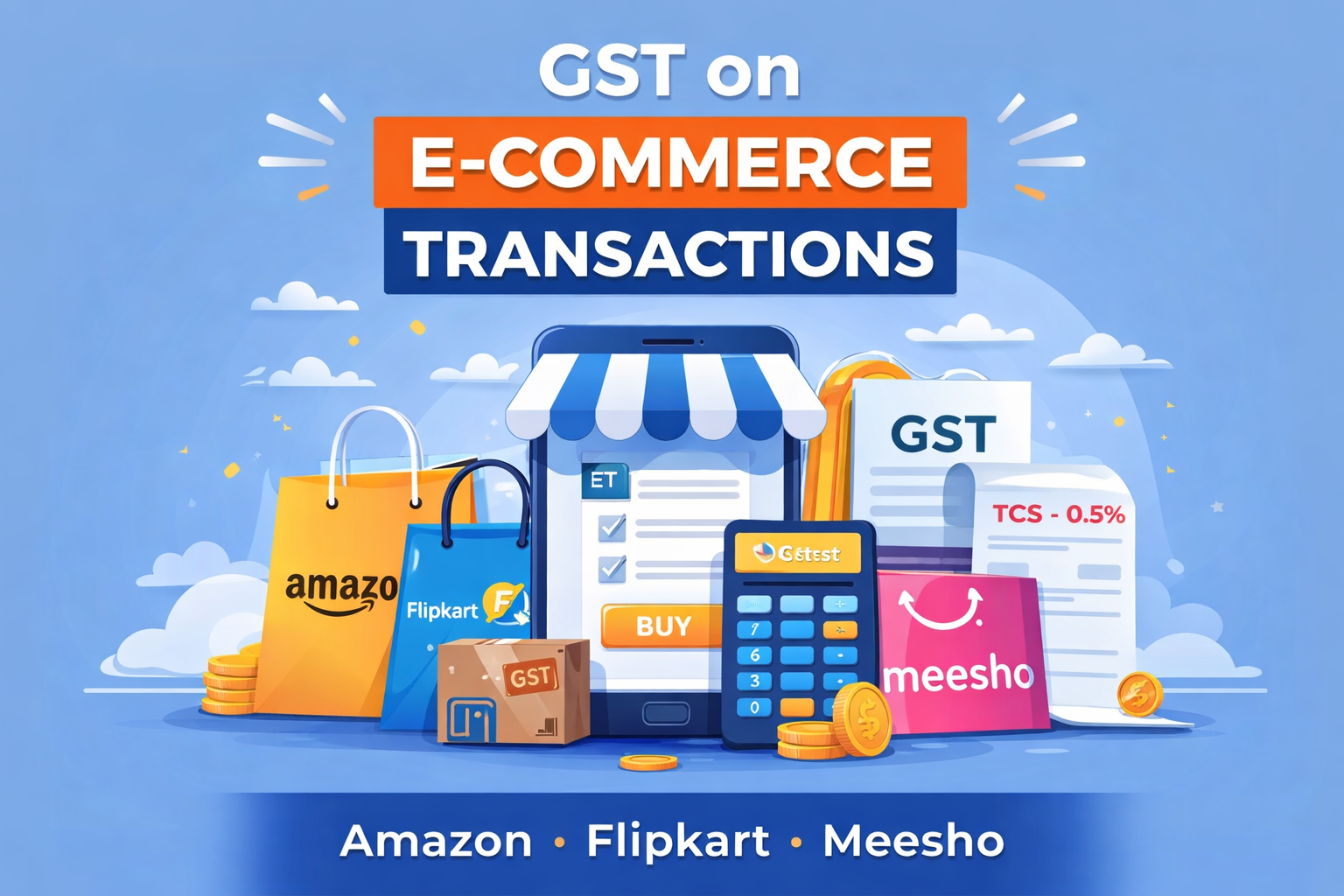
👉 Platform deducts 0.5% TCS from the seller’s sales
🧾 Practical Example:
👉 Rahul sells a product for ₹1,000 on Flipkart
- TCS @ 0.5% = ₹5
- Flipkart deducts ₹5
- Rahul receives ₹995
👉 This ₹5 is not a loss—it is credited to Rahul’s GST account.
🟢 6. Special Case – Platform Pays GST (Section 9(5))
👉 In some services, the platform pays GST instead of the seller.
📌 Examples:
- Cab booking (Uber, Ola)
- Food delivery (Zomato, Swiggy)
- Hotel booking (in some cases)
- Home services (plumber, electrician)
🧾 Practical Example:
👉 You book a cab for ₹500
✔️ GST is paid by the platform (Uber), not the driver
🟣 7. When Does the Seller Pay GST?
👉 In most cases:
✔️ Seller pays GST
✔️ Platform only deducts TCS
🧾 Example:
👉 A seller sells clothes worth ₹2,000 on Meesho
- Seller pays GST
- Meesho deducts TCS
🔵 8. GST Registration Rules
👉 Important point:
✔️ Sellers selling through e-commerce platforms usually need GST registration
✔️ Platforms (ECOs) must also register under GST
🟡 9. Returns & Compliance
👉 Platform (ECO) must:
- File GSTR-8
- Deposit TCS monthly
👉 Seller must:
- File GST returns
- Claim TCS credit
🔴 10. Common Mistakes to Avoid
❌ Not taking GST registration
❌ Ignoring TCS credit
❌ Mismatch in sales reporting
❌ Using wrong GST rate
🟢 Conclusion
👉 GST in e-commerce is easy if you remember:
✔️ Seller pays GST (mostly)
✔️ Platform collects TCS
✔️ In some services, platform pays GST
👉 Understanding these basics helps you avoid mistakes and manage your business better.
🎯 Final Tip
If you want to start selling online:
✔️ Get GST registration first
✔️ Understand pricing with GST
✔️ Keep track of TCS
🍽️ Ever wondered why GST on restaurant food is different from packaged items?
Check out our blog on GST on Food Items – Restaurant vs Packaged Food for a clear explanation.


Leave a Reply