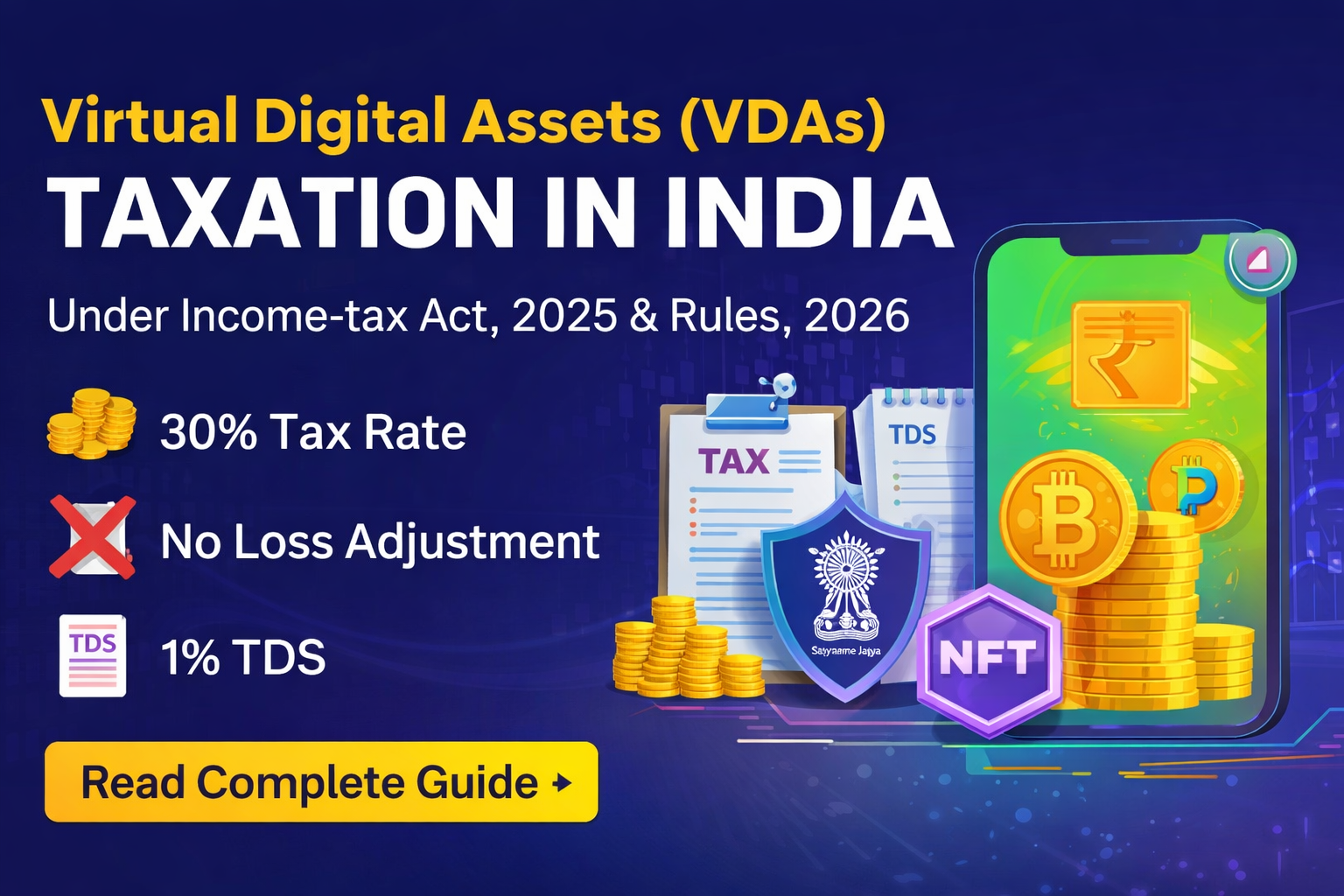
A Complete Guide for Taxpayers in India
🚀 Introduction
With the rapid rise of cryptocurrencies, NFTs, and blockchain-based assets, the Indian government has introduced a clear and strict taxation framework for Virtual Digital Assets (VDA) under the Income-tax Act, 2025, effective from 1st April 2026 .
The objective is simple:
👉 Bring digital assets into the formal tax system
👉 Ensure transparency and compliance
👉 Prevent tax evasion in the digital economy
💡 What is a Virtual Digital Asset (VDA)?
A Virtual Digital Asset (VDA) generally includes:
- Cryptocurrencies (Bitcoin, Ethereum, etc.)
- NFTs (Non-Fungible Tokens)
- Any digital asset based on cryptographic or blockchain technology
- Any other asset notified by the government
👉 These are treated as “property” or digital assets under the tax framework, aligning with the broad definition of capital assets in the Act .
💰 Tax on VDA – Flat 30% Rule
One of the most important provisions:
👉 Income from transfer of VDA is taxed at 30% (flat rate)
✔ No slab benefit
✔ Applies to all taxpayers (individuals, firms, companies)
📌 Example:
- Purchase: ₹1,00,000
- Sale: ₹1,50,000
- Profit: ₹50,000
- Tax: ₹15,000 (30%)
❌ No Deductions Allowed
The law is very strict here.
👉 Only cost of acquisition is allowed
❌ Not allowed:
- Mining expenses
- Electricity cost
- Internet bills
- Professional fees
- Any other expense
👉 This makes VDA one of the most heavily taxed asset classes
⚠️ No Set-off of Losses
Another strict rule:
- ❌ Loss from VDA cannot be set off against:
- Other VDAs
- Any other income (salary, business, etc.)
- ❌ Loss cannot be carried forward
👉 This significantly increases tax liability risk for traders.
🧾 TDS on VDA Transactions
📌 1% TDS Applicable
- Deducted at the time of transfer
- Usually deducted by the buyer or exchange
📌 Purpose:
- Track transactions
- Create audit trail
- Ensure reporting to tax authorities
🎁 Tax on Gift of VDA
If you receive VDA as a gift:
👉 Taxable under “Income from Other Sources”
✔ Tax based on Fair Market Value (FMV)
✅ Exception:
- Gift from relatives → Exempt
📊 Valuation of VDA
As per the Act:
👉 Fair Market Value (FMV) is key
Defined as the price an asset would fetch in open market
✔ Important in:
- Crypto-to-crypto transactions
- Gifts
- Transfers without consideration
📋 Compliance & Reporting (Rules, 2026)
The Income-tax Rules, 2026 introduce strong compliance requirements:
🔍 Key Requirements:
- Maintain transaction records
- Capture:
- PAN details
- Buyer & seller identity
- Transaction value
- Maintain audit trail of transactions
👉 Similar to stock exchange compliance systems
🌍 Digital Economy & Significant Economic Presence (SEP)
The rules also link VDAs to global taxation:
📌 SEP Threshold:
- ₹2 crore transaction value OR
- 3 lakh users in India
👉 Applicable to:
- Foreign crypto exchanges
- Global digital platforms
⚖️ Legal Position of VDA
VDAs are treated as:
✔ Separate asset class
✔ Not equal to:
- Currency
- Shares
- Securities
👉 Special taxation regime applies (30%)
🔐 Government Focus: Why So Strict?
The framework clearly shows that the government aims to:
- Track every digital transaction
- Prevent tax evasion
- Regulate crypto ecosystem
- Integrate VDAs into formal economy
📌 Practical Impact on Investors
👍 Pros:
- Legal clarity
- Structured taxation
- Recognition of digital assets
👎 Cons:
- High tax (30%)
- No loss adjustment
- TDS impacts liquidity
- Compliance burden
🧠 Final Thoughts
The Income-tax Act, 2025 and Rules, 2026 mark a major shift in how India treats digital assets.
👉 VDAs are no longer unregulated—they are now:
✔ Fully taxable
✔ Closely monitored
✔ Strictly regulated
📢 If you are investing or trading in crypto or NFTs, proper tax planning and compliance is no longer optional—it’s essential.
📞 Need Help?
If you need assistance with:
- VDA tax calculation
- ITR filing
- Crypto transaction reporting
👉 Feel free to reach out for professional guidance.


Leave a Reply