Under Income Tax Act, 2025 (New)
Rule 204, Rule 205 & Section 392 – Easy Guide for Everyone
✍️ Introduction
Every salaried person sees TDS (Tax Deducted at Source) in their salary slip.
But many people don’t understand:
👉 Why is tax deducted?
👉 Why is it sometimes more than expected?
👉 Why do we need to submit proofs to HR?
All of this is explained in Income-tax Act, 2025 (Section 392) and Rules 204 & 205.
Let’s understand this in simple language 👇
📌 What is TDS on Salary?
👉 TDS means:
💡 Your employer deducts tax before paying your salary
Example:
- Your salary = ₹50,000
- TDS deducted = ₹5,000
- You receive = ₹45,000
👉 This tax is deposited with the government on your behalf
📖 As per law, employer must deduct tax at the time of payment
📌 What does Section 392 say?
Section 392 is the main law for salary TDS.
It says:
✅ 1. Employer must deduct tax
- Based on your total yearly income estimate
✅ 2. Employer can adjust TDS
Based on details given by you like:
- Other income
- Home loan
- Previous salary
📖 These details can increase or decrease your tax
❗ 3. Employer cannot reduce tax without proof
👉 Very important:
- No proof = No deduction benefit
- More TDS will be deducted
📖 Employer must collect proof before allowing deductions
📊 Rule 204 – What You Tell Your Employer
👉 Rule 204 is about giving information
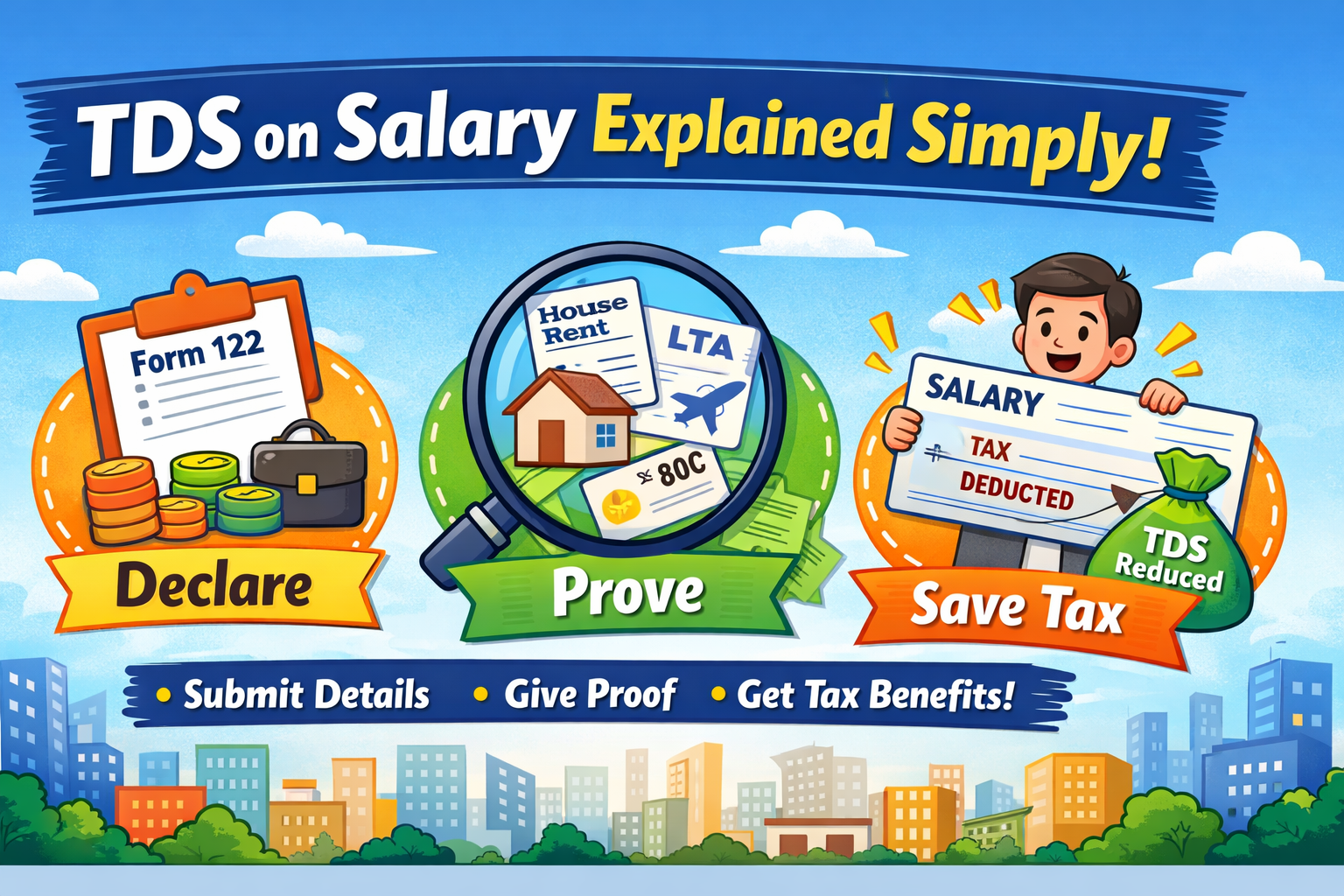
You submit details in Form 122
🧾 What you can declare:
1. 💼 Salary from another job
If you changed jobs during the year
2. 🏠 Home loan loss
Example: Interest on housing loan
3. 💰 Other income
- Bank interest
- Capital gains
4. 🧾 TDS already deducted
From bank, etc.
🎯 Why this is important?
👉 If you don’t declare:
❌ Less TDS during year
❌ But big tax payment later
📊 Rule 205 – What You Need to Prove
👉 Rule 205 is about giving proof
You submit documents in Form 124
📑 Common proofs required:
🏠 HRA (House Rent)
- Landlord name & PAN
- Required if rent > ₹1 lakh/year
✈️ LTA (Travel)
- Tickets & travel bills
🏡 Home Loan
- Interest certificate
- Lender details
💰 Investments (80C etc.)
- LIC receipt
- PPF
- ELSS
❗ Important Rule
👉 Only telling is not enough — proof is compulsory
🔗 How Everything Works Together
👉 Simple flow:
- You declare income → Rule 204
- You submit proof → Rule 205
- Employer calculates tax → Section 392
💡 Real Life Example
👨💼 Rahul’s Case:
- Salary = ₹10,00,000
- Home loan interest = ₹2,00,000
- LIC investment = ₹1,50,000
✅ If Rahul submits proof:
✔ Taxable income reduces
✔ Less TDS deducted
❌ If Rahul does NOT submit proof:
❌ Employer ignores deductions
❌ More TDS deducted
❌ Refund later (after ITR)
⚠️ Most Common Mistakes People Make
❌ Not declaring other income
❌ Not submitting investment proofs
❌ Submitting fake or incomplete documents
❌ Waiting till last month
🎯 Simple Tips for You
✔ Submit details at the beginning of the year
✔ Keep all proofs ready
✔ Check Form 26AS regularly
✔ Be honest with income declaration
✔ Don’t depend only on employer — file ITR properly
🧠 Final Understanding
👉 Remember this simple formula:
💡 Tell → Prove → Then Save Tax
- Rule 204 = Tell your income
- Rule 205 = Prove your deductions
- Section 392 = Employer deducts correct tax
🔑 Final Takeaway
👉 TDS is not extra tax — it is your advance tax paid through your employer.
👉 If you follow rules properly:
✔ No extra tax burden
✔ No big refunds or surprises
✔ Smooth tax filing
👉 Want to understand how crypto & NFTs are taxed in India?
Read our detailed guide on Virtual Digital Assets (VDA) under Income-tax Act, 2025.
