gemini generated image nl1wu1nl1wu1nl1w

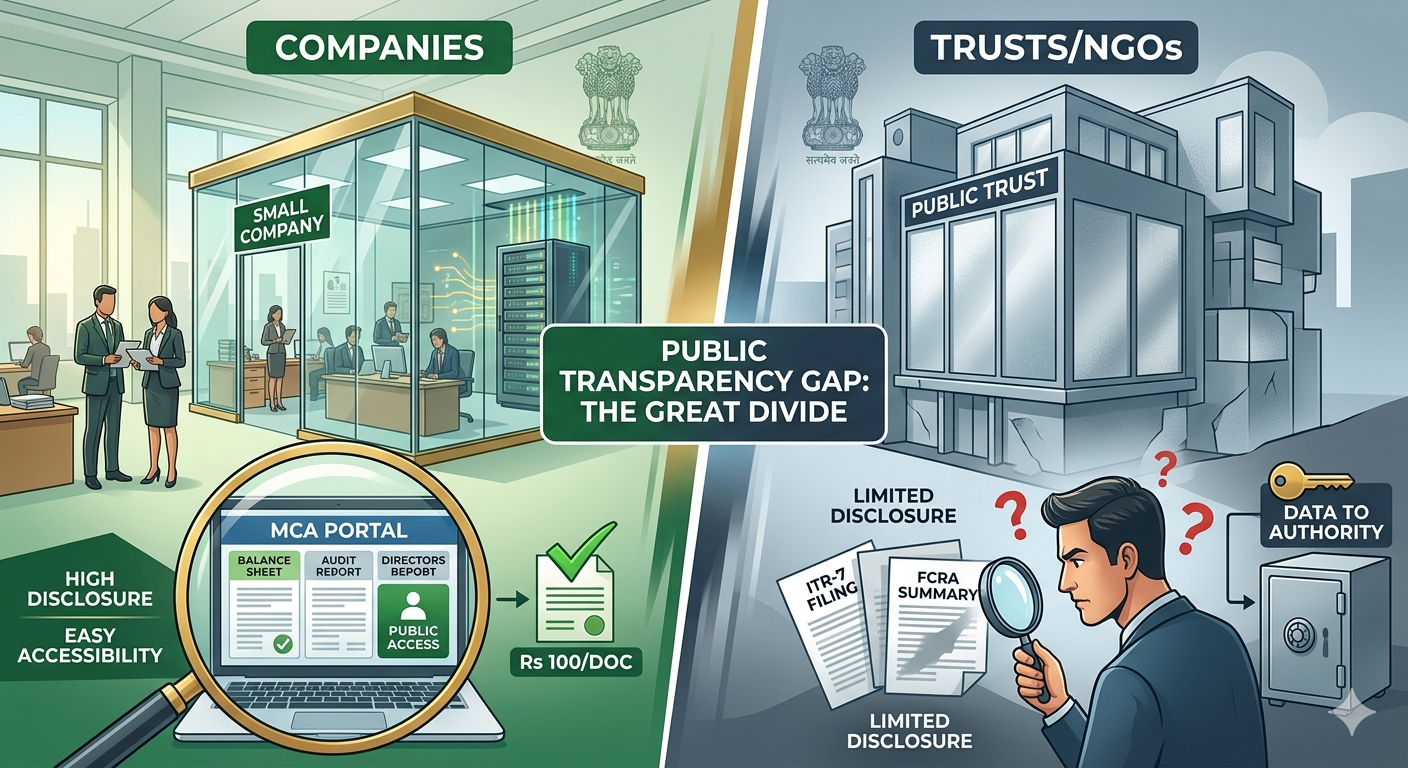
The Transparency Gap: Why Small Companies Are “Open Books” while Large Trusts Stay Under the Radar

In India’s regulatory landscape, there is a striking paradox. A small private company with a few lakhs in capital is a “glass house”—anyone with a smartphone and ₹100 can peek at their bank loans, profits, and director details.

Meanwhile, massive charitable trusts handling hundreds of crores in public donations often operate behind a veil of limited financial visibility. This isn’t necessarily a story of non-compliance; it is a story of asymmetrical disclosure architecture.


1. The Corporate Model: Transparency by Default

Companies in India are governed by the Companies Act, 2013, which treats financial data as a public good.

  • The Gold Standard (MCA21): Every company must file audited financials (Form AOC-4) and annual returns (Form MGT-7) with the Registrar of Companies (ROC).
  • Section 399: This legal provision gives any citizen the right to inspect these documents.
  • The “₹100” Reality: Whether a company earns ₹10,000 or ₹10 billion, their balance sheet is downloadable for a nominal fee on the Ministry of Corporate Affairs portal.

The Result: Corporate India operates in a high-tax, high-disclosure environment. If you want to check a competitor’s debt or an employer’s health, the data is just a click away.


2. The Trust/NGO Model: Compliance Without Visibility

Trusts and Societies operate under a fragmented legal framework (like the Indian Trusts Act, 1882 or state-specific laws like the Bombay Public Trusts Act). While they are heavily regulated, they lack a centralized public portal.

  • File-with-Authority: Trusts file their Income Tax Returns (ITR-7) and audit reports with the Tax Department. However, these filings are confidential between the taxpayer and the government.
  • The DARPAN Limitation: While the NITI Aayog’s NGO DARPAN portal lists basic details, it rarely provides full, downloadable audited balance sheets for the public.
  • FCRA Portals: These offer a glimpse into foreign funding, but if an NGO receives 100% of its funds from domestic Indian donors, that data remains largely invisible to the public.

3. Comparing the Two Worlds

FeaturePrivate CompaniesPublic Trusts / NGOs
Governing LawCompanies Act, 2013Fragmented State/Central Laws
Public AccessFully Accessible (MCA Portal)Very Limited
Financial FormatStandardized & Machine-readableNon-standardized / Paper-based
Audit TriggerMandatory for allConditional (Income-based)
Philosophy“Public-by-default”“Privacy-by-default”

4. Why This Gap Matters

This is not just a technicality; it has real-world consequences for the development sector:

  1. Information Asymmetry: A donor giving ₹5,000 cannot easily perform the same due diligence on an NGO that a small investor can perform on a private company.
  2. Trust Deficit: When financial data is hard to find, even genuine, high-impact NGOs face skepticism from the public.
  3. The Section 8 Irony: Interestingly, NGOs registered as Section 8 Companies must follow the strict disclosure rules of the Companies Act. This proves that public transparency is possible—it’s just not mandatory for most.

5. A Practicing CA’s Perspective: The Way Forward

The issue in India is not a lack of regulation—it is a lack of centralized accessibility. Compliance exists, but transparency does not.

Proposed Best Practices for NGOs:

  • Voluntary Disclosure: Don’t wait for a law. Publish your last three years of audited financials on your website.
  • Standardized Reporting: Move toward corporate-style reporting to build institutional credibility.
  • Impact Dashboards: Clearly link every rupee spent to a specific outcome or project.

Conclusion

In 2026, as the “Social Stock Exchange” begins to gain traction, the pressure for transparency will only grow. It is time we bridged the gap. If a ₹10 lakh turnover company can be an “open book,” there is no reason a ₹50 crore public trust should remain a closed one.


What are your thoughts? Should the government introduce an “MCA-style” portal for all public trusts? Let’s discuss in the comments.
https://www.instagram.com/reel/DXoR1LOEpfO/?utm_source=ig_web_copy_link&igsh=MzRlODBiNWFlZA==
chatgpt image mar 18, 2026, 10 56 26 am

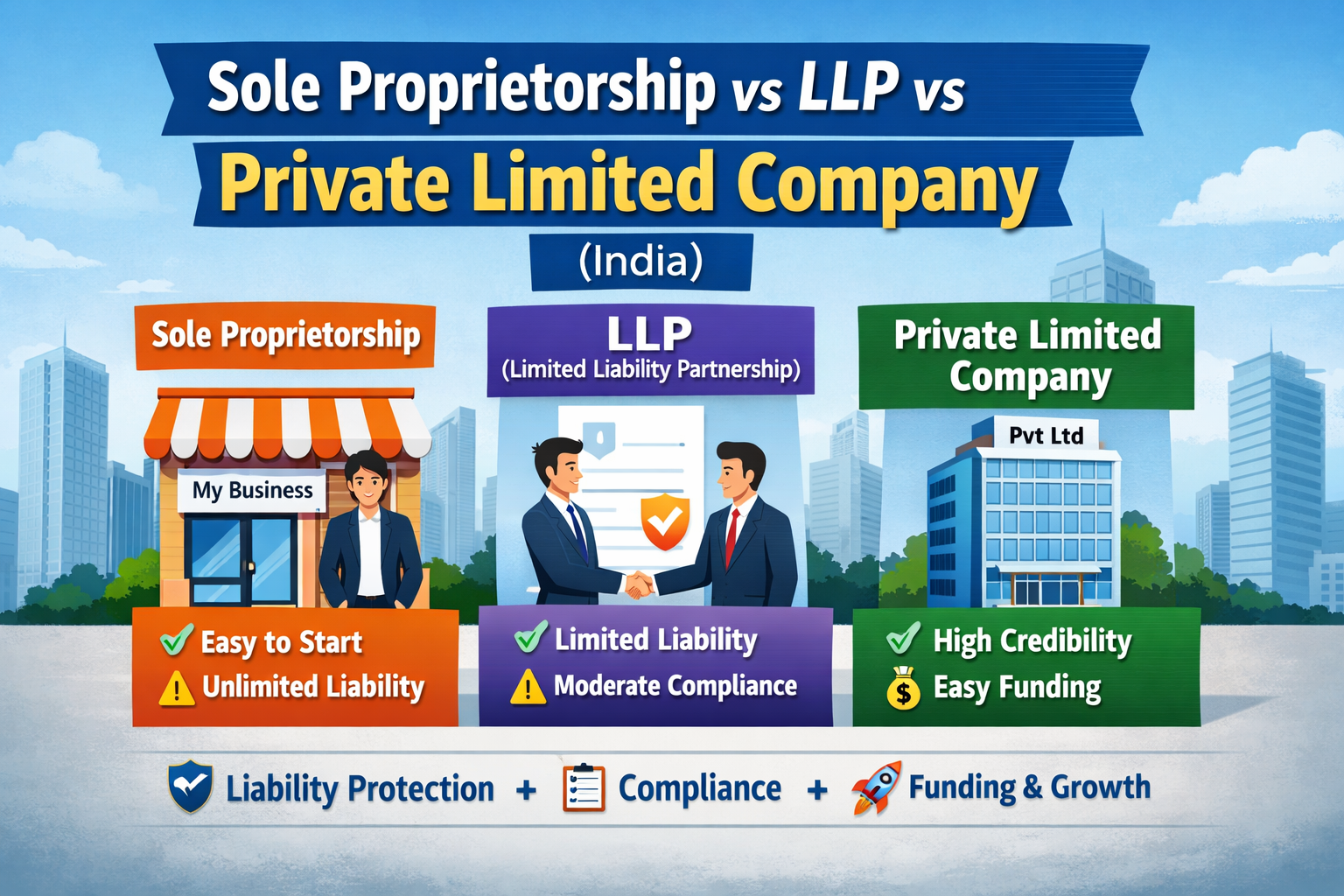
🧾 Sole Proprietorship vs LLP vs Private Limited Company (India): Which One Should You Choose?

📌 Introduction

Starting a business in India is exciting—but one of the most important decisions you’ll make is choosing the right business structure.

Should you go with a Sole Proprietorship, a Limited Liability Partnership (LLP), or a Private Limited Company (Pvt Ltd)?

Each structure has its own advantages, compliance requirements, and suitability depending on your goals.

In this blog, we’ll break down everything in simple language so you can make the right choice.


🧍‍♂️ What is a Sole Proprietorship?

A Sole Proprietorship is the simplest form of business where the owner and business are the same.

👉 There is no separate legal identity.

✅ Advantages:

  • Easy to start (no formal registration required)
  • Minimal compliance
  • Full control over business decisions
  • Low cost

❌ Disadvantages:

  • Unlimited liability (personal assets at risk)
  • Difficult to raise funds
  • Limited growth potential
  • Low credibility

📌 Best for: Freelancers, small shop owners, consultants starting out


🤝 What is an LLP (Limited Liability Partnership)?

An LLP is a hybrid structure combining features of a partnership and a company.

👉 It is a separate legal entity, and partners have limited liability.

✅ Advantages:

  • Limited liability protection
  • Less compliance compared to Pvt Ltd
  • Flexible internal management
  • No dividend distribution tax

❌ Disadvantages:

  • Difficult to raise equity funding
  • Not preferred by venture capitalists
  • Moderate compliance requirements

📌 Best for: CA firms, legal firms, agencies, professional services


🏢 What is a Private Limited Company?

A Private Limited Company is a separate legal entity registered under the Companies Act.

👉 It is the most structured and scalable business form.

✅ Advantages:

  • Limited liability protection
  • Easy to raise funding (VCs, investors)
  • High credibility and brand value
  • Perpetual succession
  • Easy transfer of ownership via shares

❌ Disadvantages:

  • High compliance (ROC filings, audits)
  • Higher setup and maintenance cost
  • More legal formalities

📌 Best for: Startups, scalable businesses, funded ventures


📊 Detailed Comparison Table

FeatureSole ProprietorshipLLPPrivate Limited Company
Legal StatusNot separateSeparate entitySeparate entity
LiabilityUnlimitedLimitedLimited
Owners1Min. 2 partnersMin. 2 shareholders
ComplianceVery lowModerateHigh
TaxationIndividual slab rates30% flat22% / 25%
FundingDifficultLimitedEasy
CredibilityLowMediumHigh
ContinuityNoYesYes
TransferabilityDifficultModerateEasy

💰 Taxation Overview (India)

🧍‍♂️ Sole Proprietorship

  • Taxed as individual income
  • Slab rates (up to 30%)

🤝 LLP

  • Flat 30% tax
  • No dividend tax

🏢 Pvt Ltd Company

  • 22% (new regime) or 25% (depending on turnover)
  • Dividend taxable in shareholders’ hands

⚖️ Key Differences You Must Know

1. Liability Protection

  • Proprietorship → ❌ Unlimited risk
  • LLP & Pvt Ltd → ✅ Limited liability

2. Compliance Burden

  • Lowest → Proprietorship
  • Medium → LLP
  • Highest → Pvt Ltd

3. Fundraising Ability

  • Best → Pvt Ltd 💰
  • Limited → LLP
  • Very difficult → Proprietorship

4. Growth Potential

  • High → Pvt Ltd 🚀
  • Medium → LLP
  • Low → Proprietorship

🧠 Which Structure Should You Choose?

👉 Choose Sole Proprietorship if:

  • You are just starting out
  • You want minimum compliance
  • Your business is small and low-risk

👉 Choose LLP if:

  • You want limited liability with fewer compliances
  • You run a professional or service-based business
  • You don’t need external funding

👉 Choose Private Limited Company if:

  • You want to scale your business
  • You are planning to raise funds
  • You want to build a strong brand

📌 Practical Examples

  • Freelancer / YouTuber → Start with Proprietorship → Later convert
  • Professional Services → LLP is ideal
  • Startup (Tech / D2C Brand) → Pvt Ltd is best

📝 Conclusion

Choosing the right structure is not just a legal formality—it directly impacts your taxes, risk, growth, and funding opportunities.

👉 Sole Proprietorship is simple but risky
👉 LLP offers balance
👉 Private Limited Company is best for scaling


📢 Final Tip

You can always start small and upgrade later as your business grows.

chatgpt image mar 11, 2026, 03 08 53 pm

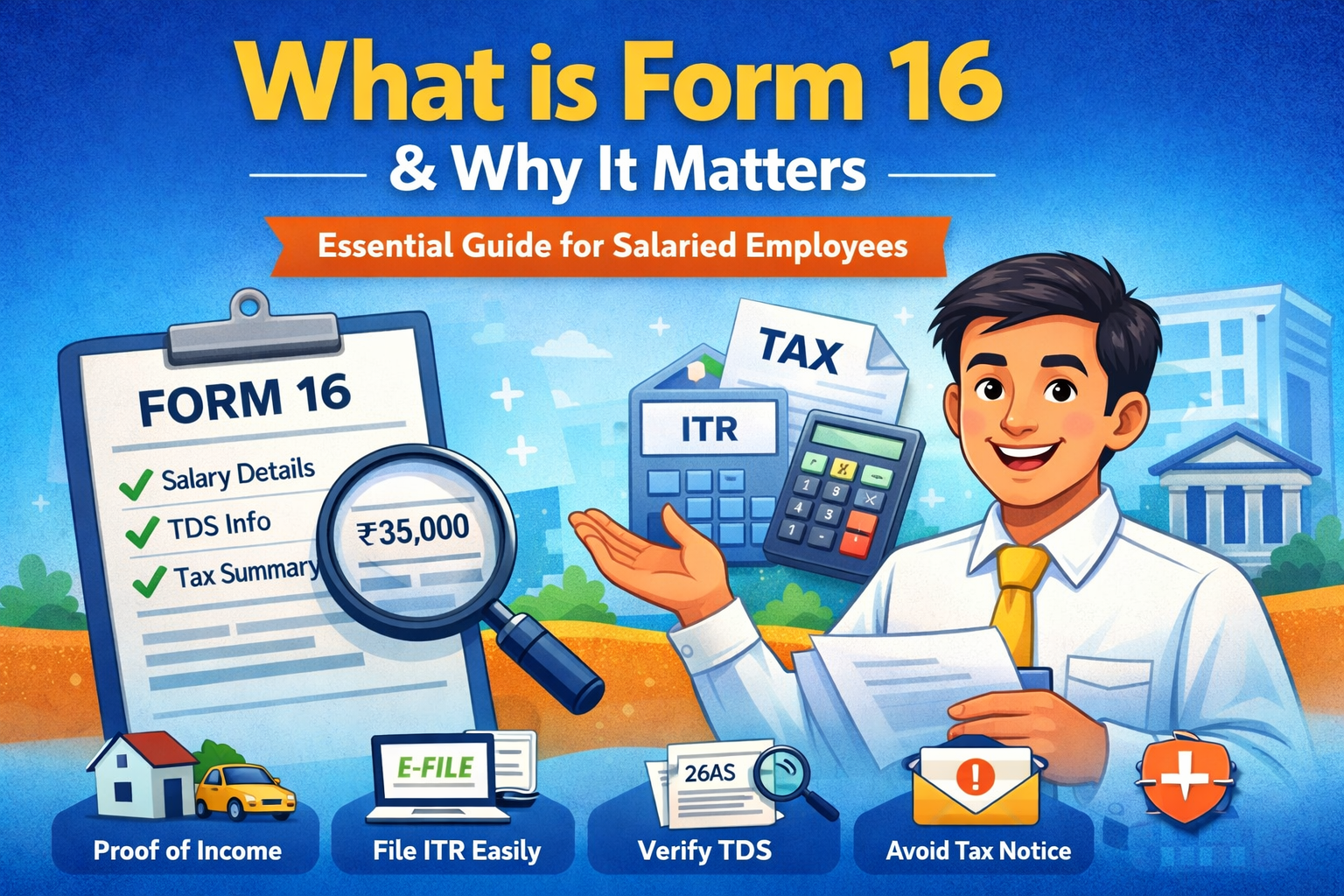
What is Form 16 and Why It Matters

If you are a salaried employee in India, Form 16 is one of the most important tax documents you will receive from your employer. It helps you file your Income Tax Return (ITR) and verify how much tax has already been deducted from your salary.

Let’s understand it in simple terms.


What is Form 16?

Form 16 is a TDS certificate issued by an employer to a salaried employee.

It shows:

  • Total salary paid during the financial year
  • Tax deducted at source (TDS) by the employer
  • Tax deposited to the government on your behalf

It is issued under Section 203 of the Income Tax Act.

👉 In simple words:
Form 16 is proof that your employer deducted tax from your salary and paid it to the government.


Who Issues Form 16?

Your employer issues Form 16 to you if:

  • Your salary crosses the taxable limit
  • The employer deducts TDS from your salary

It is usually issued after the financial year ends, generally by June 15.


Parts of Form 16

Form 16 has two main parts.

Part A – TDS Details

Part A contains:

  • Employer PAN & TAN
  • Employee PAN
  • Tax deducted and deposited
  • Summary of TDS

This part confirms that the tax deducted from your salary was deposited with the government.


Part B – Salary Breakdown

Part B contains:

  • Salary structure
  • Allowances (HRA, LTA, etc.)
  • Deductions (80C, 80D etc.)
  • Taxable income
  • Final tax calculation

This section helps you understand how your tax was calculated.


Why Form 16 Matters

1️⃣ Helps You File ITR Easily

Form 16 contains most of the information required to file your Income Tax Return.

You can simply copy the details while filing your return.


2️⃣ Proof of Income

Form 16 is accepted as official proof of income when applying for:

  • Loans
  • Credit cards
  • Visa applications
  • Renting houses

3️⃣ Verifies Tax Paid

It helps confirm that your employer has correctly deducted and deposited your tax.

You can cross-check it with your Form 26AS or AIS.


4️⃣ Avoid Tax Notices

Using Form 16 ensures that your ITR matches government records, reducing the chances of receiving an income tax notice.


What If You Don’t Receive Form 16?

You can still file your ITR using:

  • Salary slips
  • Bank statements
  • Form 26AS
  • AIS (Annual Information Statement)

Form 16 only makes filing easier, but it is not mandatory to file ITR.


Common Mistakes People Make with Form 16

❌ Not checking PAN details
❌ Ignoring deductions mentioned in Form 16
❌ Not matching it with Form 26AS
❌ Filing wrong ITR form

Always verify the details before filing your tax return.


Final Thoughts

Form 16 is one of the most important documents for salaried employees. It provides a complete summary of your salary, deductions, and taxes paid during the financial year.

Understanding your Form 16 helps you:

  • File your ITR accurately
  • Claim deductions correctly
  • Avoid tax notices

✅ Pro Tip:
Always download your Form 26AS and AIS and compare them with your Form 16 before filing your return.

chatgpt image mar 8, 2026, 12 33 36 pm

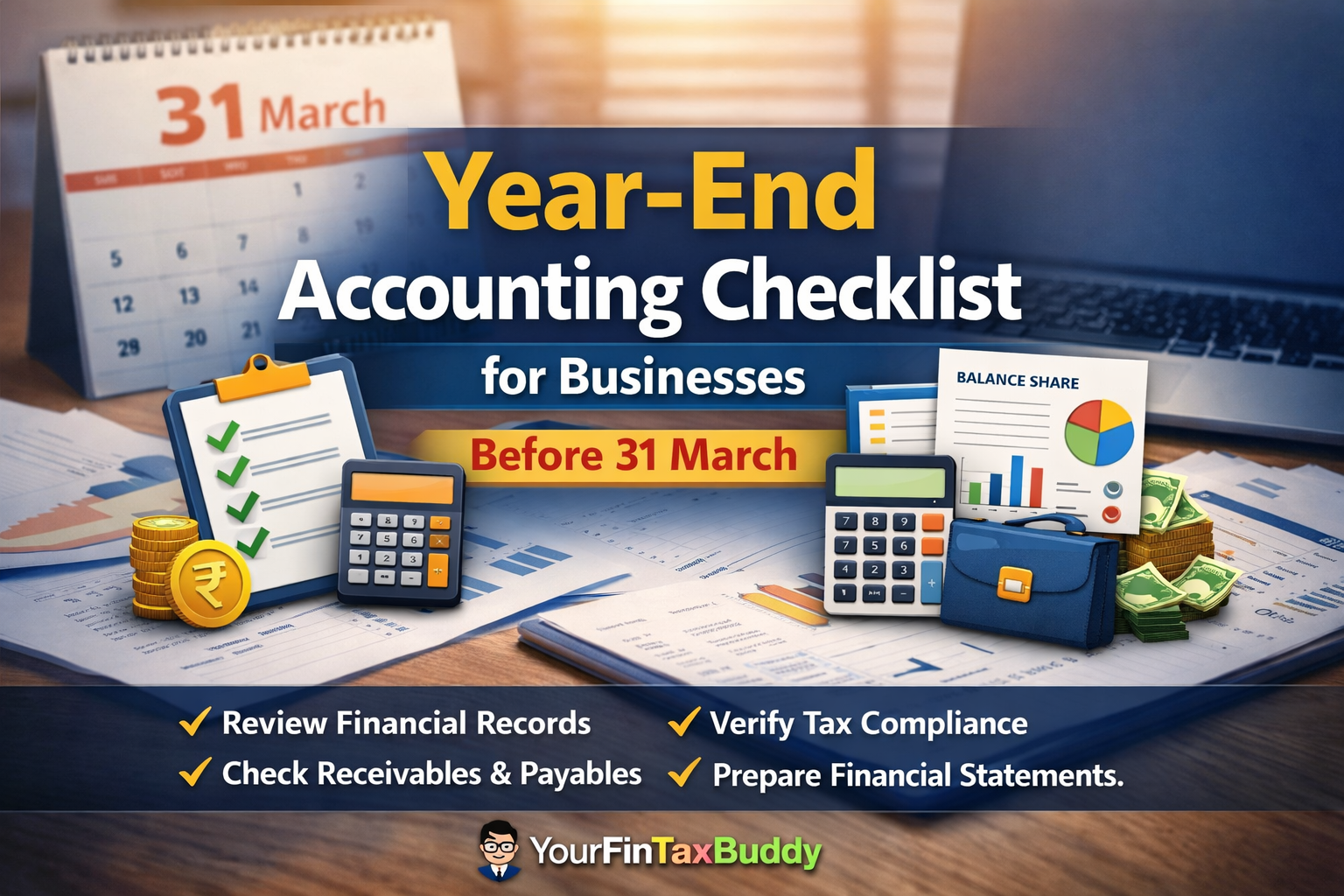
Year-End Accounting Checklist for Businesses (Before 31 March)

As the financial year comes to an end on 31 March, businesses must review their accounts carefully. Year-end accounting helps ensure that your financial records are accurate, taxes are calculated correctly, and compliance requirements are fulfilled.

Many businesses ignore this process and later face tax notices, penalties, or incorrect financial statements.

This guide provides a simple year-end accounting checklist that every business should follow before the financial year closes.


1️⃣ Review All Financial Transactions

Before closing the books, make sure all transactions are properly recorded.

Check the following:

  • Sales invoices
  • Purchase bills
  • Expense vouchers
  • Bank transactions
  • Cash transactions

Many businesses forget to record small expenses, which can affect profit calculations.

👉 Tip: Compare your bank statement with accounting records to ensure no transaction is missed.


2️⃣ Reconcile Bank Accounts

Bank reconciliation ensures that the bank balance in your books matches the actual bank statement.

You should check:

  • Pending cheques
  • Bank charges
  • Interest entries
  • Online transactions

If reconciliation is not done properly, your financial statements may show incorrect balances.


3️⃣ Verify Outstanding Receivables

Review all customers who still owe money.

Ask yourself:

  • Which invoices are unpaid?
  • Which payments are overdue?
  • Which debts may become bad debts?

Businesses should follow up with customers before year end to improve cash flow.


4️⃣ Review Outstanding Payables

Also review all amounts you owe to suppliers.

Check:

  • Pending vendor invoices
  • Unrecorded purchases
  • Advance payments to suppliers

Proper recording ensures that expenses are correctly reflected in the financial statements.


5️⃣ Check Inventory / Stock

If your business deals in goods, you must verify stock before the year ends.

This includes:

  • Physical stock verification
  • Removing damaged goods
  • Identifying obsolete stock

Incorrect inventory valuation can distort profit calculations.


6️⃣ Record All Business Expenses

Make sure all business expenses are recorded, such as:

  • Office rent
  • Salaries
  • Electricity bills
  • Professional fees
  • Internet and software costs

Unrecorded expenses can increase taxable income unnecessarily.


7️⃣ Review Fixed Assets

Check your fixed assets like:

  • Computers
  • Machinery
  • Furniture
  • Vehicles

Ensure that:

  • All new assets are recorded
  • Depreciation is calculated properly

Depreciation reduces taxable profit and must be accounted correctly.


8️⃣ Check Tax Compliance

Before closing the financial year, ensure all tax obligations are completed.

Important checks include:

  • GST returns filed
  • TDS deducted and deposited
  • Advance tax paid (if applicable)

Non-compliance can lead to penalties and interest charges.


9️⃣ Verify Loans and Liabilities

Review all business loans and liabilities.

Check:

  • Outstanding loan balances
  • Interest payable
  • EMI payments

Accurate records help present a clear financial position of the business.


🔟 Prepare Financial Statements

Finally, prepare your financial statements:

  • Profit & Loss Account
  • Balance Sheet
  • Cash Flow Statement

These reports help you understand:

  • Profit earned during the year
  • Business financial health
  • Areas where costs can be reduced

⭐ Why Year-End Accounting is Important

Year-end accounting helps businesses:

✔ Avoid tax notices
✔ Maintain accurate financial records
✔ Improve financial planning
✔ Identify unnecessary expenses
✔ Make better business decisions


Conclusion

The last month of the financial year is extremely important for businesses. Completing this year-end accounting checklist ensures that your accounts are accurate, compliant, and ready for tax filing.

If you are unsure about any step, consulting a professional accountant or Chartered Accountant can help you avoid costly mistakes.

chatgpt image mar 7, 2026, 09 41 24 pm

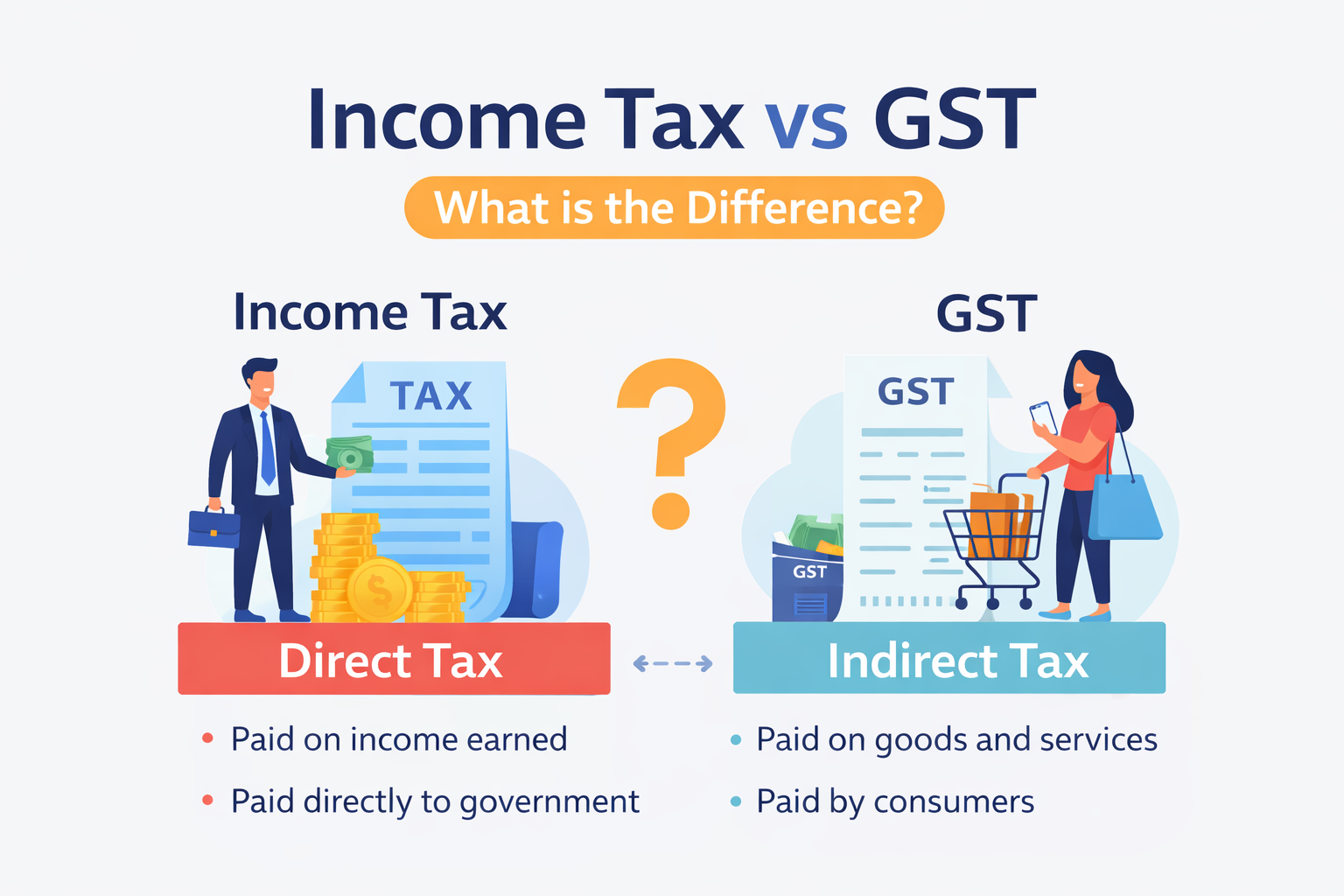
Income Tax vs GST: Key Differences Explained in Simple Language

Many people in India hear the words Income Tax and GST very often, but they are confused about what these taxes actually mean.

Some people think both are the same, but in reality they are completely different types of taxes.

In this article, we will understand:

  • What is Income Tax
  • What is GST
  • The major differences between Income Tax and GST
  • Simple real-life examples

Let’s understand everything step by step.


What is Income Tax?

Income Tax is a direct tax that you pay to the government on the income you earn.

This means if you earn money from:

  • Salary
  • Business
  • Profession
  • Rent
  • Interest
  • Capital gains

then you may have to pay Income Tax.

The tax is calculated based on your total yearly income.

Example

Suppose:

Rahul works in a company and earns ₹8,00,000 per year.

After applying deductions and tax slabs, he may have to pay some Income Tax to the government.

Here the tax is paid directly by Rahul, so it is called a Direct Tax.


What is GST?

GST stands for Goods and Services Tax.

It is an Indirect Tax that is charged when you buy goods or services.

You pay GST when you purchase things like:

  • Mobile phones
  • Clothes
  • Restaurant food
  • Online services
  • Electronics
  • Furniture

But the tax is collected by the seller and then deposited to the government.

Example

Suppose you buy a mobile phone for ₹20,000.

GST rate on mobiles is 18%.

GST amount = ₹3,600

So you pay:

₹20,000 + ₹3,600 = ₹23,600

Here you paid GST indirectly, which the seller deposits to the government.

That is why GST is called an Indirect Tax.


Key Difference Between Income Tax and GST

BasisIncome TaxGST
Type of TaxDirect TaxIndirect Tax
Paid ByIndividual or business earning incomeFinal consumer
Applied OnIncome earnedGoods and services purchased
Collected ByGovernment directly from taxpayerBusinesses collect and deposit
ExampleSalary income taxGST on restaurant bill

Simple Real-Life Example

Let’s understand this with a simple example.

Rahul earns ₹10,00,000 salary per year.

From this income, he may have to pay Income Tax depending on tax slabs.

Now Rahul goes to a restaurant and eats dinner worth ₹1,000.

Restaurant GST = 5%

GST = ₹50

Total bill = ₹1,050

So in this situation:

  • Income Tax was paid because Rahul earned income
  • GST was paid because Rahul purchased a service

Who Needs to Pay Income Tax?

Income Tax must be paid by:

  • Salaried employees
  • Business owners
  • Professionals (CA, lawyer, doctor, consultant)
  • Freelancers
  • Investors earning capital gains

However, tax is payable only if income exceeds the exemption limit.


Who Needs to Register for GST?

GST registration is required mainly for:

  • Businesses selling goods
  • Service providers
  • E-commerce sellers
  • Online businesses

But GST registration is required only if turnover crosses certain limits.

Generally:

  • ₹40 lakh for goods
  • ₹20 lakh for services

(Some states have different limits.)


Why Both Taxes Are Important

Both Income Tax and GST are important because they help the government collect revenue which is used for:

  • Roads and infrastructure
  • Healthcare
  • Education
  • Defence
  • Government services

Without taxes, it would be difficult for the government to run the country.


Conclusion

In simple words:

  • Income Tax is paid on the money you earn
  • GST is paid on the things you buy

Income Tax is a direct tax, while GST is an indirect tax collected through businesses.

Understanding the difference between these two taxes helps people better understand the Indian tax system and manage their finances more efficiently.

...
WhatsApp Chat with us!