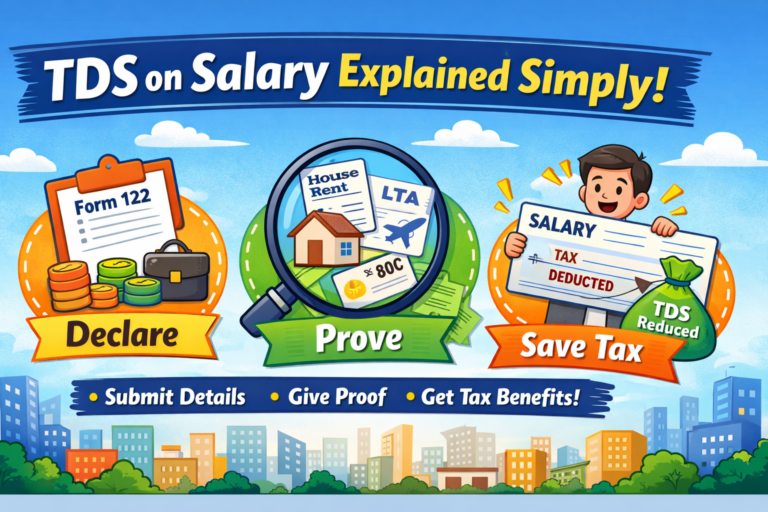
Understanding TDS on salary doesn’t have to be complicated. Under the Income-tax Rules, 2025, your employer deducts tax based on the income details you declare and the proofs you submit. Rule 204 allows you to declare your income, while Rule 205…

Virtual Digital Assets (VDAs) like cryptocurrencies and NFTs are now fully regulated under India’s Income-tax Act, 2025. With a flat 30% tax rate, strict compliance rules, and no allowance for loss adjustment, investing in digital assets has become…
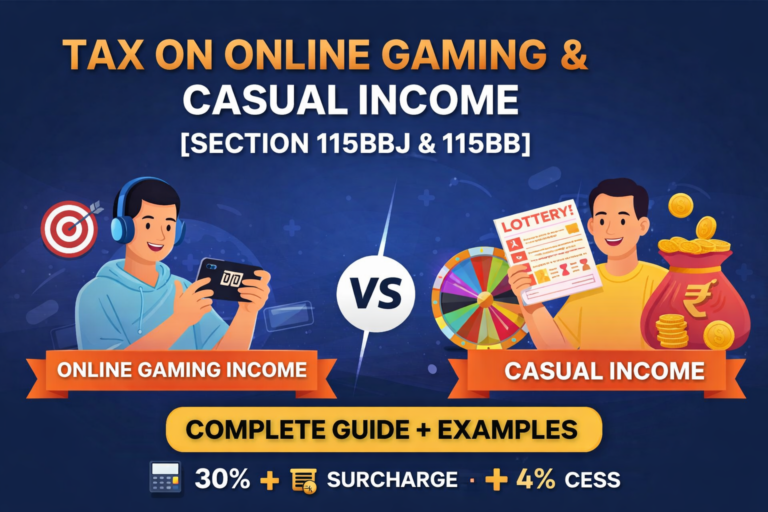
Understand how online gaming income (Section 115BBJ) and casual income like lottery & betting (Section 115BB) are taxed in India. Learn tax rates, rules, examples, and key differences in simple language…
Learn how dividend income is taxed in India, including important rules on loans to shareholders, deemed dividend, and practical examples explained in simple language…
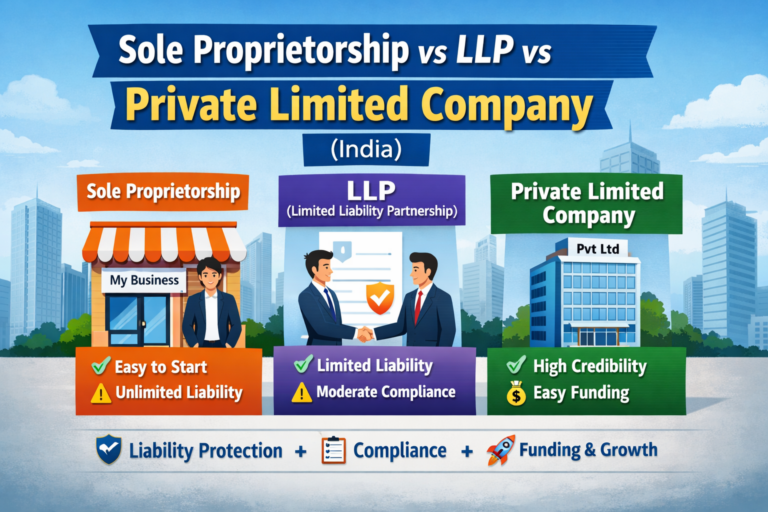
Confused between Sole Proprietorship, LLP, and Private Limited Company? This simple guide explains differences, taxation, and which structure is best for your business in India…

The Companies Compliance Facilitation Scheme, 2026 (CCFS-2026) offers a one-time opportunity for companies to clear pending ROC filings at significantly reduced costs. With up to 90% waiver on additional fees and options for dormancy or closure at…

Rental income in India is taxable under “Income from House Property”, but with 30% deduction and interest benefits, you can reduce your tax significantly. Learn with a simple example…

Cryptocurrency is taxed in India under the category of Virtual Digital Assets (VDAs). Profits from buying, selling, or trading crypto such as Bitcoin and Ethereum are taxed at a flat 30% rate, along with a 1% TDS on transactions under the Income Tax…
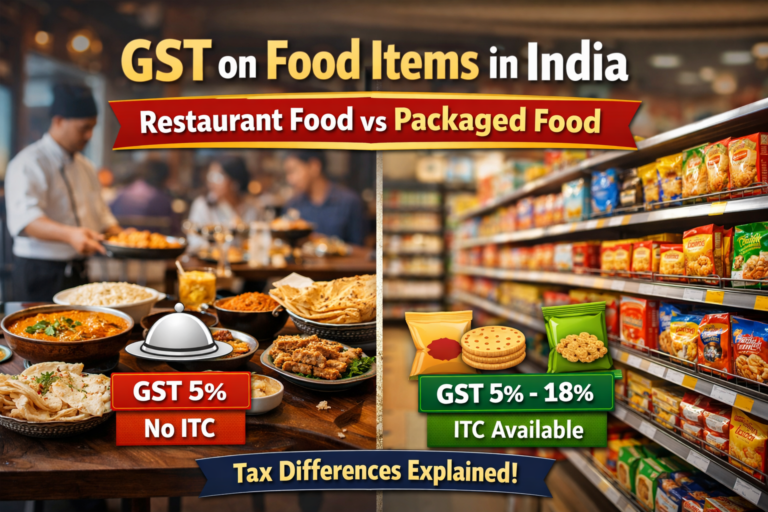
GST on food items varies depending on whether the food is served in a restaurant or sold as packaged goods. This guide explains GST rates, ITC rules, and key differences between restaurant food and packaged food in India…

Influencers and YouTubers in India earn income through AdSense revenue, brand collaborations, affiliate marketing, and sponsored content. Such earnings are treated as “Income from Business or Profession” under the Income Tax Act. This guide explains…
