chatgpt image mar 9, 2026, 10 57 49 am

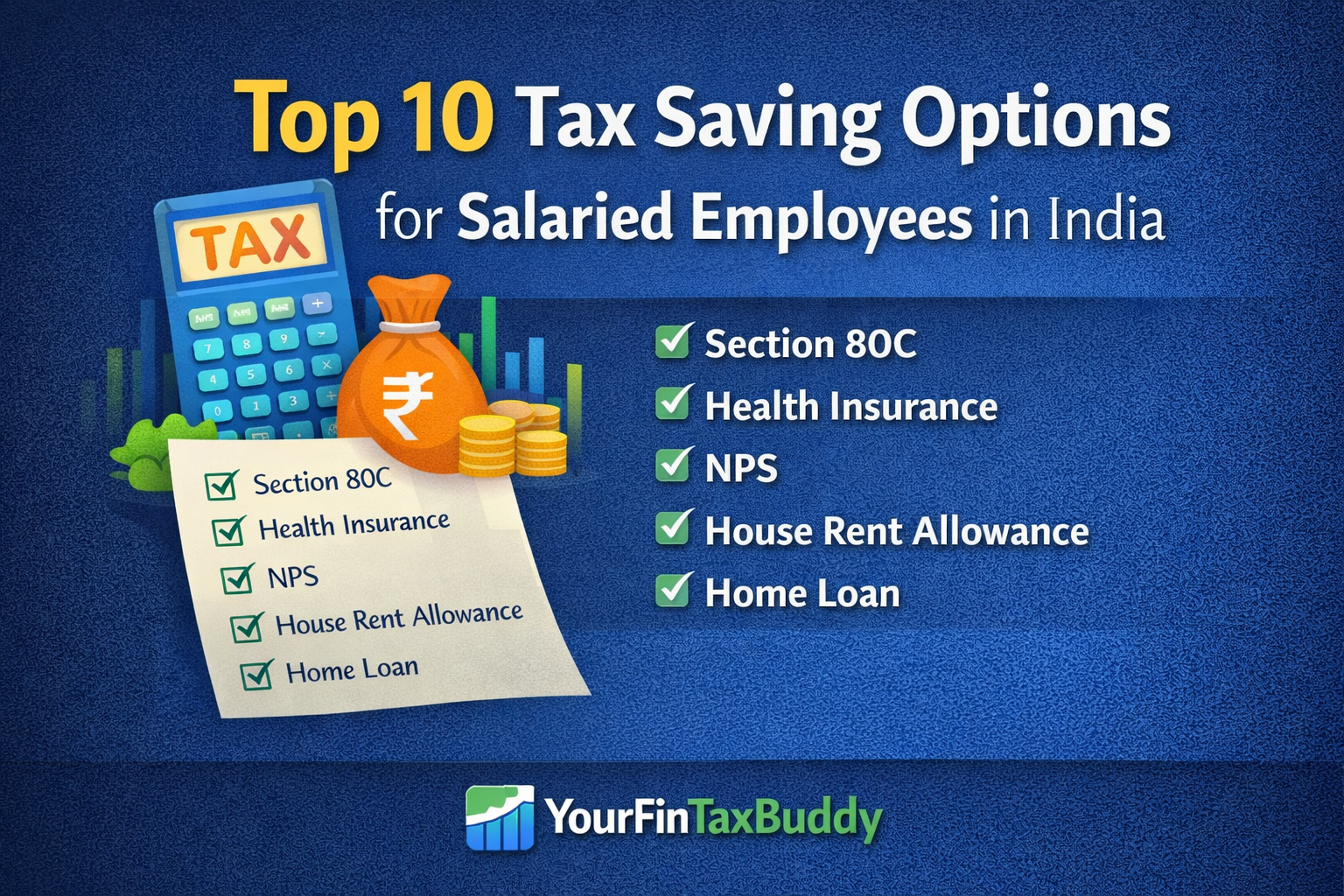
Top 10 Tax Saving Options for Salaried Employees

Many salaried employees feel that a large portion of their salary goes toward paying income tax. However, the Indian Income Tax Act provides several deductions and exemptions that can legally reduce your tax liability.

With proper tax planning, salaried individuals can save a significant amount of money every year.

In this article, we will explain the Top 10 Tax Saving Options for Salaried Employees in India in simple language with examples.


1. Section 80C – Tax Deduction up to ₹1.5 Lakh

Section 80C is one of the most commonly used tax-saving sections in India. Under this section, you can claim deductions for certain investments and expenses.

The maximum deduction allowed under Section 80C is ₹1,50,000 per financial year.

Popular investments under Section 80C:

• Public Provident Fund (PPF)
• Employee Provident Fund (EPF)
• Equity Linked Saving Scheme (ELSS)
• Life Insurance Premium
• National Savings Certificate (NSC)
• 5-Year Tax Saving Fixed Deposit
• Sukanya Samriddhi Yojana
• Tuition Fees for Children
• Principal repayment of home loan

Example

If your taxable income is ₹10 lakh and you invest ₹1.5 lakh under Section 80C, your taxable income reduces to ₹8.5 lakh.

This can significantly reduce your tax liability.


2. Health Insurance Deduction – Section 80D

Medical expenses are rising every year, and health insurance is becoming essential. The government provides tax benefits for health insurance premiums under Section 80D.

Deduction limits:

• Self, spouse and children: up to ₹25,000
• Parents (below 60 years): up to ₹25,000
• Parents (above 60 years): up to ₹50,000

Maximum deduction possible

A person paying insurance for self and senior citizen parents can claim up to ₹75,000 deduction.

This not only helps reduce tax but also provides financial security during medical emergencies.


3. National Pension System (NPS) – Section 80CCD(1B)

The National Pension System (NPS) is a government-backed retirement savings scheme. It offers an additional tax benefit of ₹50,000, which is over and above the Section 80C limit.

Key benefits of NPS:

• Additional deduction of ₹50,000
• Long-term retirement savings
• Market-linked returns
• Low-cost investment

Example

If you invest ₹50,000 in NPS, your taxable income reduces further after claiming Section 80C deductions.


4. House Rent Allowance (HRA)

If you live in a rented house and receive HRA as part of your salary, you can claim tax exemption on HRA.

The exemption depends on three factors:

• Basic salary
• Rent paid
• City of residence (metro or non-metro)

HRA exemption is the lowest of:

  1. Actual HRA received
  2. 50% of salary (metro cities) or 40% (non-metro)
  3. Rent paid minus 10% of salary

Example

If you pay rent of ₹20,000 per month and receive HRA, you may get a significant tax exemption.


5. Home Loan Interest – Section 24

If you have taken a home loan to buy or construct a house, you can claim deduction on the interest paid on the loan.

Maximum deduction allowed:

₹2,00,000 per year for self-occupied property.

Example

If you pay ₹2 lakh interest on your home loan, you can reduce your taxable income by that amount.

This is one of the biggest tax-saving opportunities for homeowners.


6. Principal Repayment of Home Loan – Section 80C

Apart from interest deduction, the principal portion of your home loan repayment also qualifies for deduction under Section 80C.

However, this deduction is included within the ₹1.5 lakh limit of Section 80C.

This means home loan EMI can help you claim deductions under two sections simultaneously.


7. Leave Travel Allowance (LTA)

Leave Travel Allowance allows salaried employees to claim tax exemption for travel expenses during vacations.

Conditions:

• Travel must be within India
• Only travel cost is covered (not hotel or food)
• Available for two journeys in four years

This benefit is usually provided by employers as part of the salary package.


8. Standard Deduction for Salaried Employees

The government provides a standard deduction of ₹50,000 to salaried individuals and pensioners.

The best part is that no investment or proof is required to claim this deduction.

This deduction automatically reduces your taxable income.


9. Education Loan Interest – Section 80E

If you have taken an education loan for higher studies, you can claim deduction on the interest paid.

Key points:

• No upper limit on deduction
• Available for 8 years
• Applicable for higher education loans

This deduction helps individuals manage the financial burden of education loans.


10. Donations – Section 80G

Donations made to certain charitable institutions are eligible for tax deductions under Section 80G.

Deduction available:

• 50% deduction
• 100% deduction (depending on the institution)

To claim this deduction, the donation must be made to approved organizations and proper receipts must be maintained.


Final Thoughts

Tax saving is not about making random investments at the end of the financial year. The best approach is to plan your taxes at the beginning of the year so that you can choose investments that match your financial goals.

Proper tax planning can help you:

• Reduce your tax liability legally
• Build long-term wealth
• Achieve financial security


✅ If you need help with tax planning, income tax filing, or GST services, feel free to connect with YourFinTaxBuddy.

You can also read our detailed guide on Section 80C deductions to understand all eligible tax-saving investments.
chatgpt image mar 7, 2026, 10 10 33 am

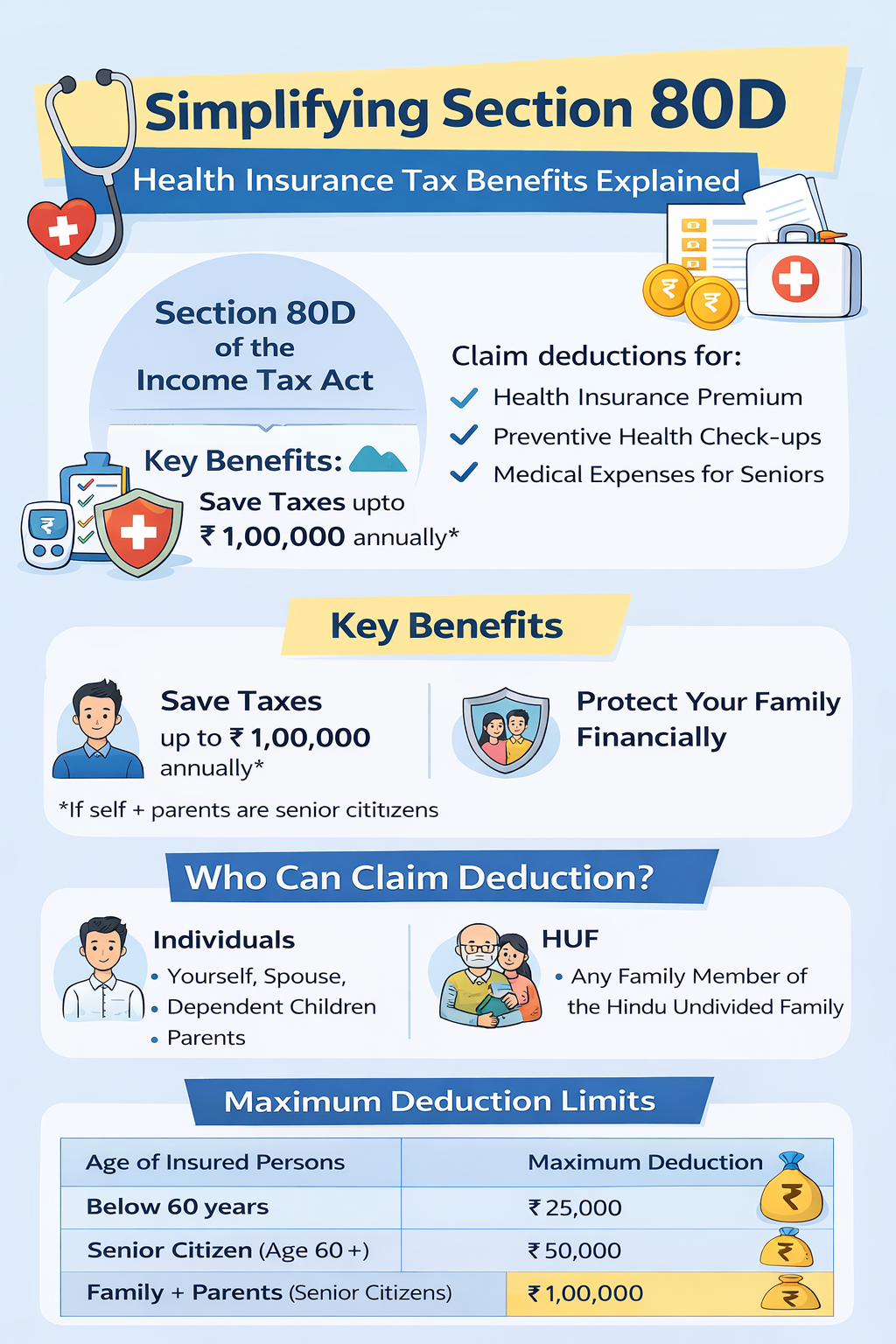
Section 80D: Health Insurance Tax Deduction Guide

Health expenses are increasing every year. To encourage people to buy health insurance and take care of their health, the government provides a tax deduction under Section 80D of the Income Tax Act.

This deduction allows taxpayers to reduce their taxable income by paying health insurance premiums for themselves and their family.

In this guide, we will explain Section 80D in simple language, including eligibility, deduction limits, preventive health checkups, and examples.


What is Section 80D?

Section 80D allows individuals and Hindu Undivided Families (HUF) to claim tax deductions for health insurance premiums and certain medical expenses.

You can claim deductions for:

  • Health insurance premium
  • Preventive health check-ups
  • Medical expenses for senior citizens (if no insurance is available)
  • Contribution to CGHS (Central Government Health Scheme)

However, this deduction is available only under the old tax regime.

If you choose the new tax regime under Section 115BAC, you cannot claim this deduction.


Who Can Claim Deduction Under Section 80D?

The following taxpayers can claim this deduction:

Individuals

You can claim deduction for insurance premiums paid for:

  • Yourself
  • Your spouse
  • Dependent children
  • Parents

HUF (Hindu Undivided Family)

An HUF can claim deduction for insurance premium paid for any family member of the HUF.


Maximum Deduction Allowed Under Section 80D

The deduction depends on age of insured persons.

1. For Self, Spouse and Children

AgeMaximum Deduction
Below 60 years₹25,000
If any person is a senior citizen₹50,000

2. For Parents

Parents AgeMaximum Deduction
Below 60 years₹25,000
Senior citizen (60+ years)₹50,000

Maximum Total Deduction Possible

SituationMaximum Deduction
Self + Family (<60) + Parents (<60)₹50,000
Self + Family (<60) + Parents (>60)₹75,000
Self (>60) + Parents (>60)₹1,00,000

This means a taxpayer can reduce taxable income by up to ₹1,00,000 under Section 80D.


Deduction for Preventive Health Check-up

The government also encourages preventive healthcare.

You can claim deduction up to:

₹5,000 per year

This includes health check-ups for:

  • Self
  • Spouse
  • Children
  • Parents

Important points:

  • Payment can be made in cash
  • It is included within the overall limit of ₹25,000 or ₹50,000

Example:

If your limit is ₹25,000 and you paid:

  • Insurance premium = ₹23,000
  • Health check-up = ₹4,000

You can claim only ₹25,000 deduction.


Deduction for Medical Expenses of Senior Citizens

Sometimes senior citizens are unable to get health insurance due to age or medical conditions.

In such cases:

You can claim deduction for medical expenses up to ₹50,000.

Conditions:

  • Person must be 60 years or older
  • No health insurance policy exists for that person

Mode of Payment Rules

To claim deduction under Section 80D:

Health Insurance Premium

Payment must be made through:

  • Online payment
  • Debit card
  • Credit card
  • Bank transfer
  • Cheque

Cash payment is not allowed for insurance premiums.


Preventive Health Check-up

Payment can be made in cash.


Contribution to CGHS

If you contribute to Central Government Health Scheme (CGHS), it also qualifies for deduction under Section 80D.

This is mainly applicable to government employees and pensioners.


Deduction When Premium is Paid for Multiple Years

Sometimes insurance companies allow lump sum premium for multiple years.

In such cases, the deduction is spread over the policy period.

Example:

If you pay ₹60,000 for 3-year policy

You can claim:

₹60,000 ÷ 3 = ₹20,000 deduction per year


Example of Section 80D Deduction

Let’s understand with a simple example.

Example

Mr. A pays:

  • Health insurance for self & spouse = ₹20,000
  • Preventive health check-up = ₹3,000
  • Health insurance for father (age 63) = ₹47,000

Deduction Calculation

Self + spouse:

20,000 + 3,000 = 23,000
Maximum allowed = ₹25,000

Deduction allowed = ₹23,000

Parents (senior citizen):

Premium = ₹47,000
Maximum allowed = ₹50,000

Deduction allowed = ₹47,000

Total Deduction

₹23,000 + ₹47,000 = ₹70,000

This amount will reduce the taxable income.


Important Conditions to Remember

Before claiming deduction under Section 80D, remember:

1️⃣ Deduction is available only under the old tax regime

2️⃣ Premium must be paid from taxable income

3️⃣ Insurance policy must be from IRDAI approved insurer

4️⃣ Premium payment cannot be made in cash

5️⃣ Preventive health check-up limit is ₹5,000


Why Section 80D is Important

Section 80D provides two major benefits:

Tax Saving

You can reduce taxable income by up to ₹1,00,000.

Financial Protection

Health insurance protects you from unexpected medical expenses.

In today’s world where medical costs are rising rapidly, having health insurance is both a financial and health necessity.


Final Thoughts

Section 80D is one of the most useful tax deductions available to taxpayers in India.

By purchasing health insurance for yourself and your family, you can:

  • Save tax
  • Protect your family financially
  • Cover medical emergencies

Therefore, every taxpayer should understand and utilize Section 80D effectively while filing income tax returns.

👉 You can also read our detailed guide on tax saving investments under Section 80C.

chatgpt image mar 6, 2026, 11 07 52 pm

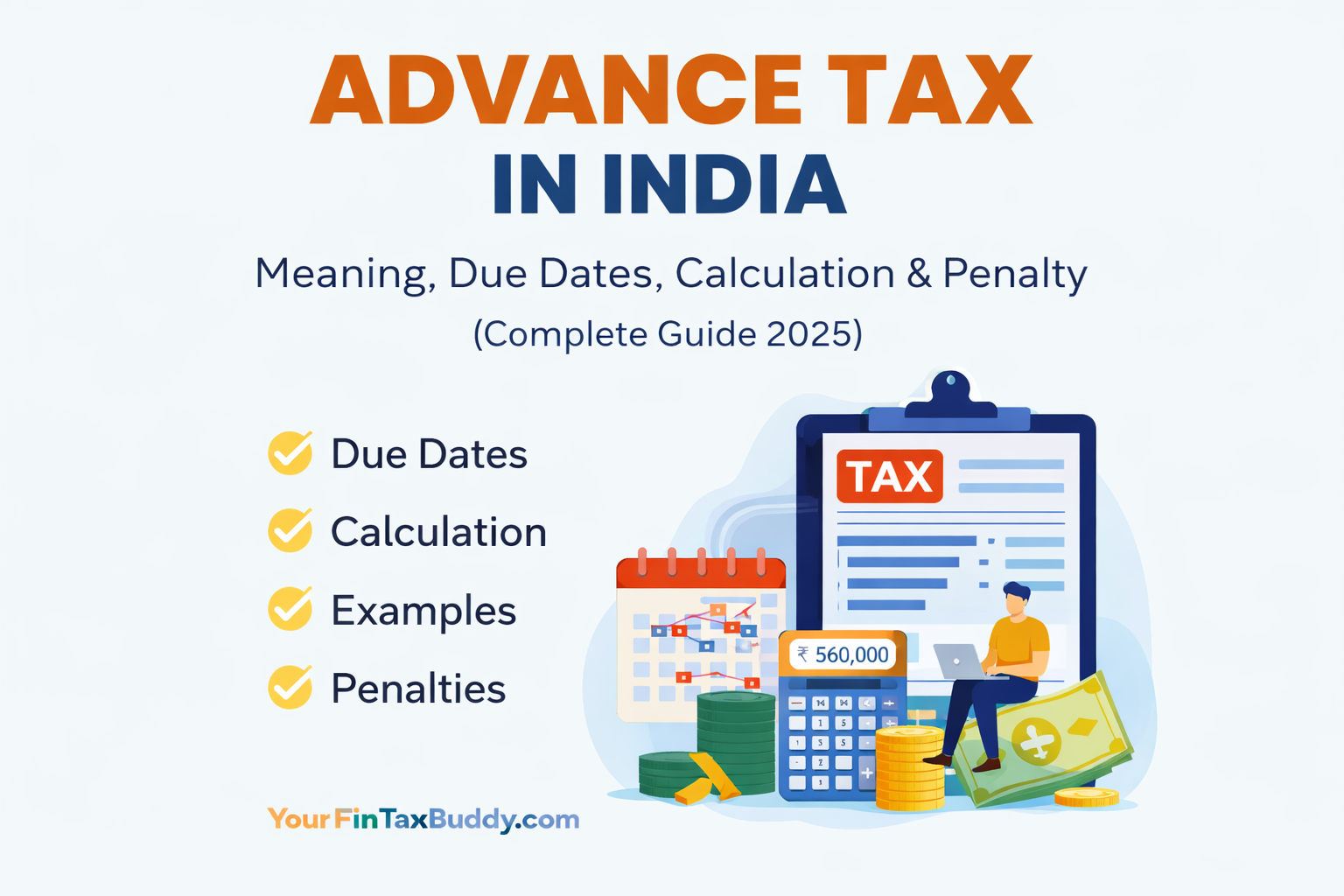
Advance Tax in India – Meaning, Due Dates, Calculation & Penalty (Complete Guide)

What is Advance Tax?

Advance tax means paying income tax during the financial year itself instead of paying the entire tax at the end of the year.

Normally, tax is paid when filing the Income Tax Return. But if your total tax liability in a financial year is ₹10,000 or more, the Income Tax Act requires you to pay tax in instalments during the year. This is called Advance Tax.

Because of this system, the government receives tax regularly instead of waiting until the end of the year.

Advance tax is also known as “Pay As You Earn Tax.”


Who Needs to Pay Advance Tax?

You must pay advance tax if:

✔ Your total tax liability is ₹10,000 or more in a financial year.

Advance tax applies to:

  • Salaried employees (if tax liability remains after TDS)
  • Freelancers
  • Business owners
  • Professionals (CA, doctor, lawyer etc.)
  • Investors earning capital gains
  • Individuals earning rental income
  • People earning interest income

Example

Rahul works in a company and also earns ₹3,00,000 from freelance work.

His total tax liability becomes ₹45,000 after deductions.

Since his tax liability is more than ₹10,000, he must pay advance tax.


Who is NOT Required to Pay Advance Tax?

1️⃣ Senior Citizens

A resident senior citizen (age 60 years or more) does not have to pay advance tax if:

  • They do not have business or professional income

Example:

Mr. Sharma (age 65) earns:

  • Interest income: ₹5,00,000
  • Pension: ₹3,00,000

He does not need to pay advance tax.


2️⃣ Presumptive Taxation (Section 44AD / 44ADA)

Businesses or professionals using presumptive taxation scheme:

  • They can pay entire advance tax in one instalment by 15 March.

Example:

A consultant declaring income under Section 44ADA can pay 100% advance tax by 15 March.


Advance Tax Due Dates

Advance tax must be paid in four instalments during the year.

Due DateTax Payable
15 JuneAt least 15% of total tax
15 SeptemberAt least 45% of total tax
15 DecemberAt least 75% of total tax
15 March100% of total tax

Any advance tax paid up to 31 March is still considered advance tax.


Advance Tax Example

Let’s understand with a simple example.

Suppose your total tax liability for the year is ₹1,00,000.

You will pay tax like this:

DateAmount
15 June₹15,000
15 September₹30,000
15 December₹30,000
15 March₹25,000

Total = ₹1,00,000


How to Calculate Advance Tax

Follow these steps:

Step 1

Estimate your total income for the year

Include income from:

  • Salary
  • Business
  • Freelancing
  • Rent
  • Capital gains
  • Interest income

Step 2

Subtract deductions

Example:

  • Section 80C
  • Section 80D
  • Section 80G etc.

Step 3

Calculate income tax as per applicable slab.


Step 4

Reduce:

  • TDS already deducted
  • TCS
  • Relief under sections 89/90/91

The remaining tax is advance tax payable.


Example of Advance Tax Calculation

Suppose Neha has the following income:

Salary: ₹8,00,000
Freelance income: ₹4,00,000

Total income = ₹12,00,000

She claims deduction under Section 80C = ₹1,50,000

Taxable income = ₹10,50,000

Tax liability ≈ ₹1,12,500

TDS deducted by employer = ₹70,000

Remaining tax = ₹42,500

Since this amount is above ₹10,000, she must pay advance tax.


How to Pay Advance Tax Online

You can pay advance tax through the Income Tax Portal.

Steps:

1️⃣ Visit the Income Tax e-filing portal
2️⃣ Go to e-Pay Tax
3️⃣ Select Advance Tax (Challan 280)
4️⃣ Enter PAN and details
5️⃣ Choose Assessment Year
6️⃣ Pay through net banking / UPI / debit card

After payment, keep the challan receipt safely.


Interest for Non-Payment of Advance Tax

If advance tax is not paid properly, interest may be charged under:

  • Section 234B
  • Section 234C

Interest Under Section 234B

This interest is charged when:

  • Advance tax not paid, OR
  • Advance tax paid is less than 90% of total tax liability

Interest Rate:

1% per month or part of month

Example

Total tax liability = ₹1,00,000
Advance tax paid = ₹50,000

Shortfall = ₹50,000

Interest will be charged from 1 April until payment.


Interest Under Section 234C

This interest is charged when advance tax instalments are not paid on time.

Interest rate:

1% per month

Example:

Suppose tax liability = ₹1,00,000

But by 15 September you paid only ₹20,000 instead of ₹45,000.

Shortfall = ₹25,000

Interest will be charged on ₹25,000.


When Interest Under 234C is NOT Applicable

Interest may not apply if shortfall is due to:

  • Capital gains
  • Lottery income
  • Dividend income
  • New business income

Provided the tax is paid in remaining instalments or by 31 March.


Interest for Late Filing of Return (Section 234A)

If you file your Income Tax Return after the due date, interest will apply.

Interest Rate:

1% per month

It is charged on unpaid tax amount.


Benefits of Paying Advance Tax

Paying advance tax on time helps you:

✔ Avoid heavy interest and penalties
✔ Manage tax payments easily
✔ Reduce financial burden at year end
✔ Stay compliant with tax laws


Common Mistakes People Make

❌ Ignoring freelance or side income
❌ Forgetting capital gains tax
❌ Not adjusting TDS
❌ Paying advance tax only in March
❌ Wrong income estimation


Conclusion

Advance tax is an important part of India’s tax system. If your tax liability exceeds ₹10,000, you must pay tax during the year in instalments.

Paying advance tax on time helps you avoid interest under Sections 234B and 234C and ensures smooth tax compliance.

If you have multiple income sources like freelancing, rent, or investments, always estimate your tax liability early and pay advance tax accordingly.


Frequently Asked Questions (FAQs)

Is advance tax mandatory?

Yes, if your tax liability is ₹10,000 or more in a financial year.


Do salaried employees need to pay advance tax?

Usually no, because employers deduct TDS.
But if you have additional income, you may need to pay advance tax.


What happens if I miss an advance tax instalment?

Interest will be charged under Section 234C.


Can advance tax be paid after 15 March?

Yes. Any tax paid before 31 March is treated as advance tax.


Can advance tax be revised?

Yes. You can revise advance tax payments based on updated income estimates.

chatgpt image mar 5, 2026, 11 48 57 pm

ELSS Mutual Funds: Save Tax Under Section 80C While Growing Your Wealth

As the financial year approaches its end, many taxpayers start searching for ways to save tax before 31st March. One of the smartest options available is investing in Equity Linked Savings Schemes (ELSS).

ELSS funds not only help you reduce your taxable income under Section 80C, but they also give you the opportunity to build wealth through equity investments.

If you are planning your taxes this month, understanding ELSS can help you make a smart financial decision.


What is an ELSS Fund?

An Equity Linked Savings Scheme (ELSS) is a type of equity mutual fund that qualifies for tax deduction under Section 80C of the Income Tax Act, 1961.

When you invest in ELSS:

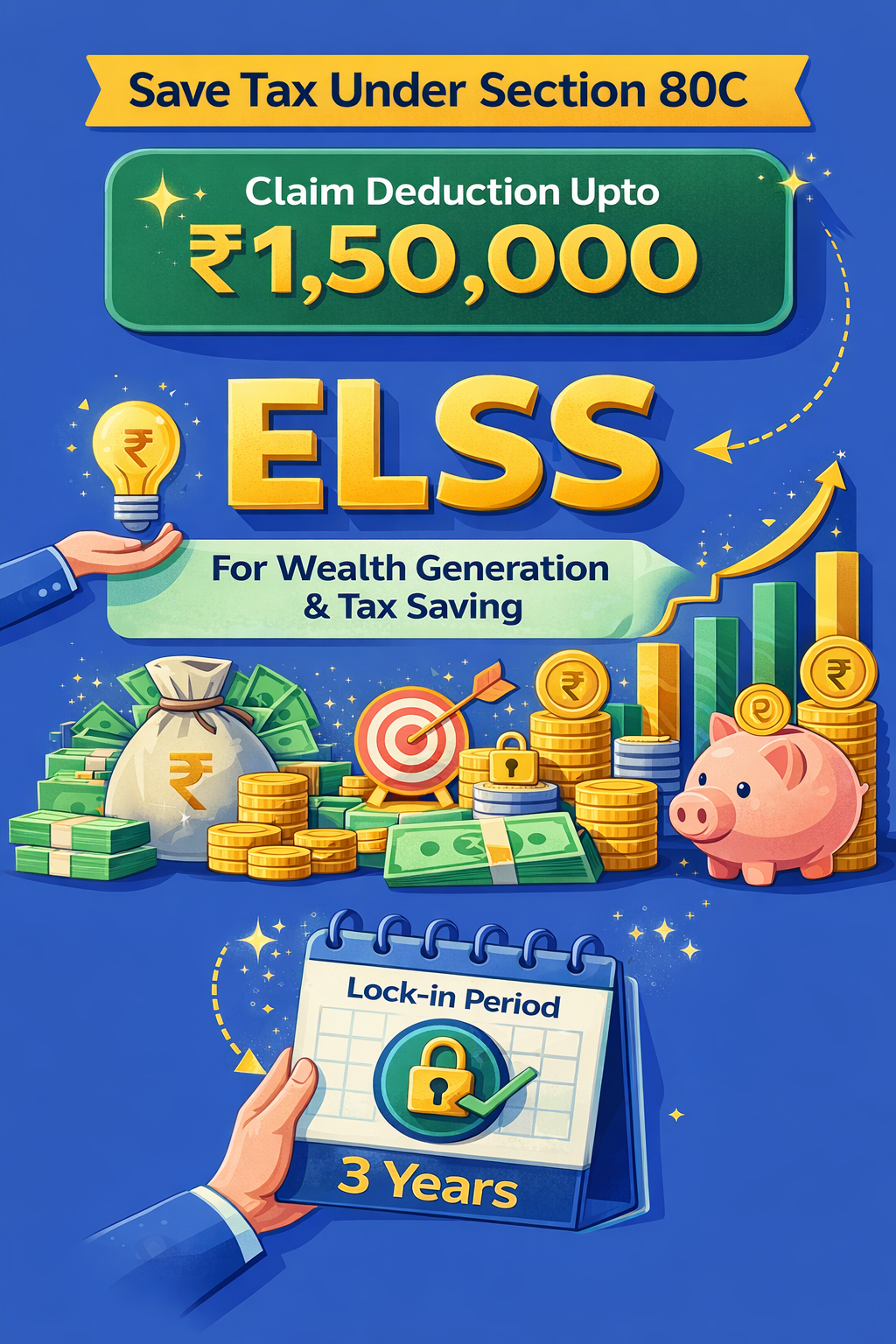
  • You can claim a tax deduction up to ₹1,50,000 in a financial year.
  • This can help you save up to ₹46,800 in taxes depending on your tax slab.

ELSS funds invest at least 80% of their portfolio in equities, while the remaining portion may be invested in debt instruments.

Because of their equity exposure, ELSS funds have the potential to generate higher returns compared to traditional tax-saving options.


Important Reminder: Last Month to Invest for Section 80C Deduction

Since the financial year ends on 31st March, this is the last month to make tax-saving investments if you want to claim deduction under Section 80C for FY 2025–26.

However, this deduction is available only if you choose the Old Tax Regime.

If you are planning to opt out of the Default (New) Tax Regime, investments like ELSS can help reduce your taxable income.


Key Features of ELSS Mutual Funds

1. Tax Deduction Under Section 80C

Investments in ELSS qualify for deduction of up to ₹1.5 lakh per financial year under Section 80C.

This directly reduces your taxable income.


2. Shortest Lock-in Period Among 80C Investments

ELSS funds have a mandatory lock-in period of 3 years.

This is the shortest lock-in period among all Section 80C investment options.

Comparison:

  • PPF → 15 years
  • NSC → 5 years
  • Tax Saver FD → 5 years
  • ELSS → 3 years

After 3 years, you can redeem 100% of your investment without restrictions.


3. Equity-Based Investment

ELSS funds invest minimum 80% in equity and equity-related instruments, giving investors the opportunity to benefit from stock market growth.

Over the long term, equities tend to beat inflation and generate higher returns.


4. No Upper Investment Limit

There is no maximum limit on how much you can invest in ELSS.

However, tax deduction under Section 80C is capped at ₹1.5 lakh per year.


Taxation of ELSS Returns

Returns from ELSS investments are treated as Long-Term Capital Gains (LTCG) because of the 3-year lock-in period.

Tax rules are:

  • LTCG up to ₹1.25 lakh per financial year is tax-free
  • Gains above ₹1.25 lakh are taxed at 12.5%

This makes ELSS one of the most tax-efficient investment options available.


Factors to Consider Before Investing in ELSS

Before investing in ELSS mutual funds, investors should keep the following factors in mind.

Investment Horizon

Although the lock-in period is 3 years, experts recommend an investment horizon of at least 5 years.

This helps reduce the impact of market volatility.


Market Risk

ELSS funds invest in equities, which means:

  • Returns are not guaranteed
  • Performance depends on stock market movements

However, historically, equities have delivered better long-term returns compared to traditional tax-saving investments.


Lock-in Period

ELSS funds come with a mandatory lock-in period of 3 years from the date of investment.

During this period:

  • You cannot redeem your investment
  • No premature withdrawal is allowed

SIP vs Lump Sum: Which is Better for ELSS?

Investors can invest in ELSS through Systematic Investment Plan (SIP) or Lump Sum investment.

SIP Investment

SIP is suitable for investors who:

  • Prefer lower risk
  • Want to invest regularly in small amounts

Benefits of SIP:

  • Invest across different market cycles
  • Buy more units when markets are low
  • Average purchase price over time

This concept is known as Rupee Cost Averaging.


Lump Sum Investment

Lump sum investments work better when:

  • Markets are low or bearish
  • Investor has long investment horizon (5–7 years)

However, lump sum investments carry higher market timing risk.


ELSS vs Other Tax-Saving Investments

InvestmentReturnsLock-in PeriodTax on Returns
5-Year Tax Saver FD4% – 6%5 yearsTaxable
PPF7% – 8%15 yearsTax-Free
NSC7% – 8%5 yearsTaxable
NPS8% – 10%Till RetirementPartially Taxable
ELSS Funds12% – 16% (historically)3 yearsPartially Taxable

ELSS stands out because it offers:

  • Shortest lock-in period
  • Potentially higher returns
  • Tax benefits under Section 80C

Who Should Invest in ELSS?

ELSS is ideal for investors who:

  • Want to save tax under Section 80C
  • Are comfortable with equity market risk
  • Have an investment horizon of 5+ years
  • Want to build long-term wealth

Final Thoughts

ELSS mutual funds combine tax savings and wealth creation in a single investment option. With a minimum 80% exposure to equities, they offer the potential for higher long-term returns while helping reduce taxable income.

Since March is the last month to invest for claiming Section 80C deduction for FY 2025-26, taxpayers planning to opt out of the default tax regime should review their tax planning and consider ELSS as part of their investment strategy.

A disciplined and long-term approach can help investors benefit from both tax savings and capital appreciation.

Top 10 ELSS Mutual Funds Based on 3-Year Returns

ELSS mutual funds have historically delivered strong long-term returns compared to many traditional tax-saving investments. Based on 3-year performance, here are some of the top ELSS mutual funds in India.

RankELSS Mutual Fund3-Year Return (p.a.)AUM (₹ Cr.)
1SBI ELSS Tax Saver Fund22.1%31,861 Cr
2SBI Long Term Advantage Fund21.9%368 Cr
3Motilal Oswal ELSS Tax Saver Fund20.6%4,188 Cr
4HDFC ELSS Tax Saver Fund19.7%16,749 Cr
5DSP ELSS Tax Saver Fund19.0%17,223 Cr
6WhiteOak Capital ELSS Tax Saver Fund19.0%437 Cr
7HSBC ELSS Tax Saver Fund18.4%3,961 Cr
8Baroda BNP Paribas ELSS Tax Saver Fund17.9%910 Cr
9ICICI Prudential Long Term Wealth Enhancement Fund17.6%39 Cr
10Sundaram Long Term Tax Advantage Fund17.6%21 Cr

Returns are based on 3-year annualized performance and may change with market conditions.


Important Note for Investors

Past performance does not guarantee future returns. While choosing an ELSS fund, investors should also consider:

  • Fund manager track record
  • Expense ratio
  • Portfolio quality
  • Consistency of returns
  • Risk profile

It is always advisable to invest based on long-term financial goals rather than short-term performance rankings.


Quick Tip for Taxpayers

Since March is the last month of the financial year, taxpayers who plan to opt for the Old Tax Regime should complete their Section 80C investments before 31 March to claim deductions.

ELSS mutual funds can be a smart last-minute tax-saving option because they combine tax benefits with wealth creation potential.

chatgpt image mar 6, 2026, 10 36 53 am

Section 80C Deduction: Complete Guide to Save ₹1.5 Lakh Tax in India

Introduction

Tax planning is an important part of personal financial management. In India, one of the most popular ways to reduce income tax liability is through Section 80C of the Income Tax Act.

Section 80C allows taxpayers to claim deductions on certain investments and expenses, thereby reducing their taxable income.

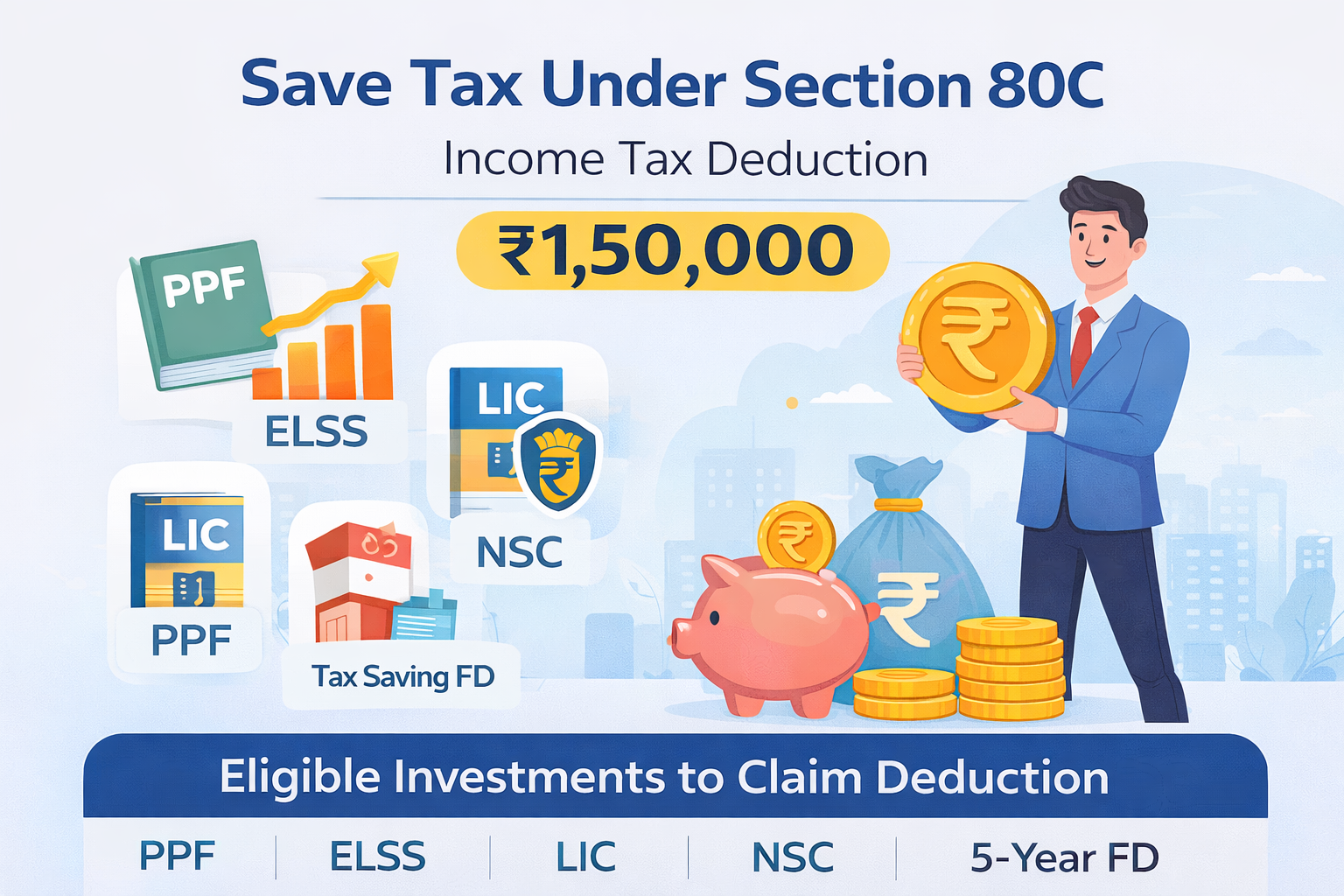
Under this section, individuals and Hindu Undivided Families (HUFs) can claim a maximum deduction of ₹1,50,000 in a financial year.

However, it is important to note that this deduction is available only under the Old Tax Regime.

This article explains Section 80C in simple terms, including eligible investments, conditions, and important points taxpayers should know.


What is Section 80C?

Section 80C is a provision under the Income Tax Act that allows taxpayers to reduce their taxable income by investing in specified financial instruments or making certain eligible payments.

This deduction encourages individuals to:

  • Save money
  • Invest for the future
  • Build retirement funds
  • Secure their family financially

Maximum Deduction Limit

The maximum deduction allowed under Section 80C is:

₹1,50,000 per financial year

Even if your total investments exceed ₹1,50,000, the deduction cannot go beyond this limit.


Who Can Claim Deduction Under Section 80C?

The deduction is available to:

  • Individual taxpayers
  • Hindu Undivided Families (HUF)

Companies and partnership firms cannot claim deduction under Section 80C.


Important Condition

Section 80C deduction is not available under the New Tax Regime.

If a taxpayer chooses the New Tax Regime under Section 115BAC, they will not be able to claim this deduction.


Popular Investments Eligible Under Section 80C

Below are some of the most common investments that qualify for deduction under Section 80C.


1. Life Insurance Premium

Premium paid for life insurance policies is eligible for deduction.

This includes policies taken for:

  • Self
  • Spouse
  • Children

Both term insurance and endowment policies qualify for deduction.


2. Public Provident Fund (PPF)

PPF is one of the safest long-term investment options backed by the Government of India.

Key features:

  • Lock-in period: 15 years
  • Tax-free returns
  • Investment qualifies for Section 80C deduction

Maximum investment allowed per year: ₹1,50,000.


3. Employee Provident Fund (EPF)

For salaried employees, contributions to the Employee Provident Fund (EPF) automatically qualify for deduction under Section 80C.

Both employer and employee contribute to this retirement savings scheme.


4. Equity Linked Saving Scheme (ELSS)

ELSS mutual funds are tax-saving mutual funds that invest primarily in equity.

Key features:

  • Lock-in period: 3 years (shortest among 80C investments)
  • Potential for higher returns
  • Market-linked investment

5. Sukanya Samriddhi Yojana

This scheme is designed for the financial security of a girl child.

Parents or guardians can open an account for their daughter.

Benefits include:

  • High interest rate
  • Tax deduction under Section 80C
  • Tax-free maturity

6. National Savings Certificate (NSC)

NSC is a government savings scheme available at post offices.

Features:

  • Fixed interest rate
  • Lock-in period of 5 years
  • Investment eligible for tax deduction

7. Tax Saving Fixed Deposit (5-Year FD)

Banks offer tax-saving fixed deposits with a lock-in period of five years.

Investment made in these deposits qualifies for deduction under Section 80C.


8. Senior Citizen Savings Scheme (SCSS)

This scheme is designed specifically for senior citizens and offers attractive interest rates.

Deposits made under this scheme are eligible for Section 80C deduction.


9. Post Office 5-Year Time Deposit

Similar to bank fixed deposits, the Post Office 5-year time deposit also qualifies for tax deduction.


10. Tuition Fees for Children

Parents can claim deduction for tuition fees paid for full-time education of their children.

Important conditions:

  • Maximum deduction allowed for 2 children
  • Only tuition fees qualify
  • Development fees and donations are not allowed

11. Repayment of Home Loan Principal

The principal portion of the home loan EMI is eligible for deduction under Section 80C.

In addition, the following expenses are also eligible:

  • Stamp duty
  • Registration charges

However, the property should not be sold within 5 years.

Lock-In Period for Common Investments

Different investments have different lock-in periods.

InvestmentLock-in Period
ELSS Mutual Funds3 years
Tax Saving FD5 years
NSC5 years
PPF15 years
Sukanya Samriddhi Yojana21 years

When Can Deduction Be Reversed?

The deduction claimed under Section 80C may be reversed if certain conditions are not met.

Examples include:

  • Selling a house property within 5 years
  • Surrendering life insurance policy early
  • Premature withdrawal from tax-saving deposits

In such cases, the earlier deduction may become taxable income.


Example of Tax Saving Using Section 80C

Suppose your annual income is:

₹8,00,000

You invest the following:

PPF: ₹50,000
Life Insurance: ₹40,000
ELSS: ₹60,000

Total Investment = ₹1,50,000

Your taxable income becomes:

₹8,00,000 − ₹1,50,000 = ₹6,50,000

Thus, your tax liability reduces significantly.


Conclusion

Section 80C is one of the most important provisions for tax planning in India. It allows taxpayers to reduce their taxable income while building long-term financial security.

By choosing the right combination of investments such as PPF, ELSS, life insurance, and tax-saving deposits, individuals can save tax while growing their wealth.

However, taxpayers should carefully compare the Old Tax Regime and New Tax Regime before making investment decisions.

Proper tax planning can help you save money, reduce taxes, and achieve financial stability.

chatgpt image feb 27, 2026, 02 16 15 pm

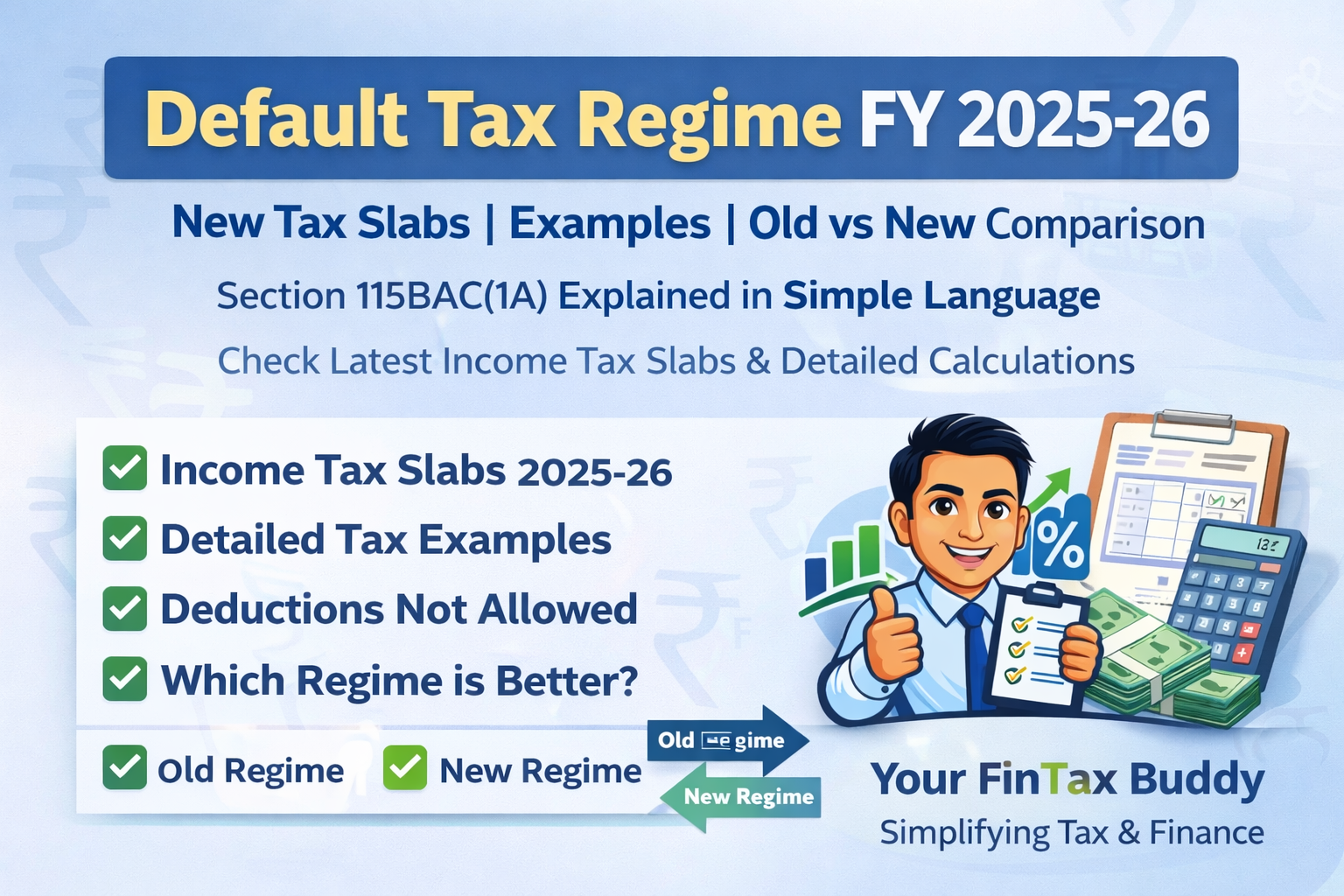
📢 Default Tax Regime FY 2025-26 – Complete Guide with Examples

The Default Tax Regime FY 2025-26 (also called the New Tax Regime 2025) is applicable under Section 115BAC(1A) of the Income Tax Act.

From FY 2023-24 onwards, the new tax regime became the default option. This means for Financial Year 2025-26 (Assessment Year 2026-27), your income tax will automatically be calculated under this regime unless you choose the old regime.

In this detailed guide, we explain:

  • Income Tax Slabs for FY 2025-26
  • Deductions not allowed in new tax regime
  • Detailed tax calculation examples
  • Old vs New Tax Regime comparison
  • Which regime is better for you

🔹 What is Default Tax Regime under Section 115BAC(1A)?

The Default Tax Regime is a simplified tax system introduced to reduce tax rates while removing most deductions and exemptions.

Earlier, taxpayers had to opt for it. Now it is applied automatically unless you choose the old regime.

It offers:

✔ Lower tax slab rates
✔ Simple tax calculation
✔ No need to maintain proof for multiple deductions

However, most deductions like 80C and 80D are not available.


🔹 Income Tax Slabs FY 2025-26 (New Tax Regime 2025)

Below are the latest Income Tax Slabs for FY 2025-26:

Annual IncomeTax Rate
Up to ₹4,00,000NIL
₹4,00,001 – ₹8,00,0005%
₹8,00,001 – ₹12,00,00010%
₹12,00,001 – ₹16,00,00015%
₹16,00,001 – ₹20,00,00020%
₹20,00,001 – ₹24,00,00025%
Above ₹24,00,00030%

👉 4% Health & Education Cess is extra
👉 Section 87A rebate available as per government limits

These are the updated slab rates under the New Tax Regime 2025-26.


🔹 Deductions Not Allowed in Default Tax Regime

One major difference between Old vs New Tax Regime is deductions.

Under Default Tax Regime FY 2025-26, you cannot claim:

  • Section 80C (LIC, PPF, ELSS, EPF, etc.)
  • Section 80D (Medical Insurance)
  • HRA (House Rent Allowance)
  • LTA
  • Home Loan Interest (Self-Occupied Property)
  • Most Chapter VI-A deductions

Allowed deductions include:

  • 80CCD(2) – Employer contribution to NPS
  • 80JJAA – Specific business deductions

If you invest heavily for tax saving, the old regime may reduce your tax more.


🔹 Detailed Tax Calculation Examples (FY 2025-26)

Let’s understand the Income Tax Calculation under New Tax Regime 2025 with examples.


✅ Example 1: Income ₹7,50,000

Tax Calculation:

  • ₹0 – ₹4,00,000 → NIL
  • ₹4,00,001 – ₹7,50,000 (₹3,50,000 × 5%) = ₹17,500

Total Tax = ₹17,500
Cess @4% = ₹700

👉 Final Tax = ₹18,200


✅ Example 2: Income ₹15,00,000

  • ₹0 – ₹4,00,000 → NIL
  • ₹4,00,001 – ₹8,00,000 = ₹20,000
  • ₹8,00,001 – ₹12,00,000 = ₹40,000
  • ₹12,00,001 – ₹15,00,000 = ₹45,000

Total Tax = ₹1,05,000
Cess @4% = ₹4,200

👉 Final Tax = ₹1,09,200


✅ Example 3: Income ₹25,00,000

Total slab-wise tax:

₹3,30,000

Cess @4% = ₹13,200

👉 Final Tax = ₹3,43,200

This example clearly shows how slab-based taxation works in the New Tax Regime FY 2025-26.


🔹 Old vs New Tax Regime – Which is Better in FY 2025-26?

Choosing between Old vs New Tax Regime 2025-26 depends on your income and investments.

Default Regime is Better If:

✔ You don’t invest much under 80C
✔ You don’t claim HRA
✔ You don’t have housing loan
✔ You prefer lower slab rates

Old Regime is Better If:

✔ You claim full 80C (₹1.5 lakh)
✔ You pay home loan interest
✔ You claim HRA
✔ You have medical insurance deduction

Always calculate tax under both regimes before filing ITR.


🔹 Frequently Asked Questions (FAQs)

1️⃣ Is new tax regime mandatory in FY 2025-26?

No. It is default, but you can choose old regime while filing ITR.

2️⃣ Can I switch between old and new regime?

Salaried individuals can switch every year. Business income cases have restrictions.

3️⃣ Is rebate under Section 87A available?

Yes, rebate is available as per income limits notified by government.

4️⃣ Are 80C and 80D allowed in new regime?

No, these deductions are not available under Default Tax Regime FY 2025-26.


🔹 Final Conclusion

The Default Tax Regime FY 2025-26 offers lower tax rates but removes most deductions. It is suitable for taxpayers who do not invest much in tax-saving instruments.

Before filing your Income Tax Return (ITR), compare both regimes carefully. The right choice can save thousands of rupees.

If you need professional help in tax planning or ITR filing, contact Your FinTax Buddy today.

...
WhatsApp Chat with us!